Play Atlantic City Blackjack
East-coast rules - eight decks, late surrender, double after split.Atlantic City Blackjack is free to play right here with no download, no signup and no real-money risk - you start every session with 1,000 play chips. East-coast rules - eight decks, late surrender, double after split. It is dealt from 8 decks, blackjack pays 3:2, and a basic-strategy player faces a house edge of about ~0.35% with basic strategy.
Atlantic City Blackjack is modeled on the regulated New Jersey casino rules, dealt from an eight-deck shoe with the dealer standing on soft 17. Its signature feature is late surrender: after the dealer checks for blackjack you may fold a hopeless hand and reclaim half your bet rather than play it out. You can also double on any two cards, double after splitting, and split most pairs up to four hands. The eight-deck shoe raises the house edge a hair compared with a single-deck game, but the surrender option and liberal doubling claw most of it back, leaving a very fair table. Atlantic City rewards players who know the handful of surrender spots cold - hard 16 versus a 9, 10 or Ace, and hard 15 versus a 10 - because folding those losers at half price is money the eight-deck classic game simply throws away.
How to Play Atlantic City Blackjack
In a nutshell: East-coast rules - eight decks, late surrender, double after split. It is dealt from 8 decks (416 cards), blackjack pays 3:2, and the house edge is about ~0.35% with basic strategy.
The rules of Atlantic City at a glance
| Dealer rule | Stands on all 17s (including soft 17) |
|---|---|
| Decks | 8 standard 52-card decks |
| Blackjack pays | 3:2 |
| Surrender | Late surrender (half bet back) |
| Split | Most pairs to 4 hands; double after split allowed |
| Insurance | Offered on a dealer Ace, pays 2:1 |
| House edge | ~0.35% with basic strategy |
| Difficulty | Surrender option |
| Family | Classic |
Step by step
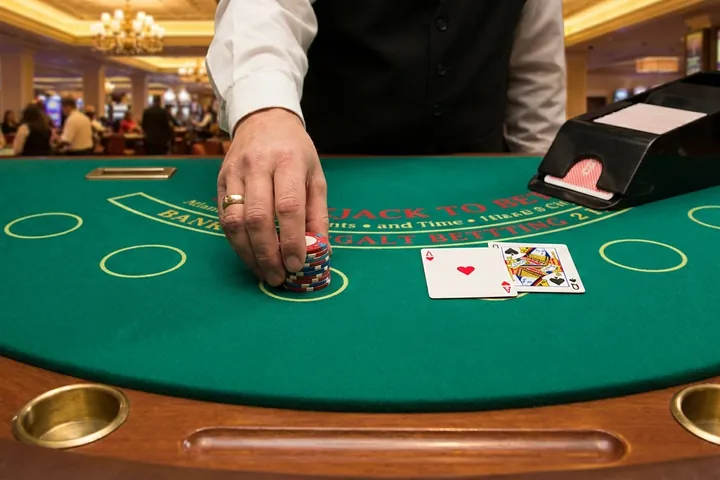
Objective
Outscore the dealer without passing 21. Blackjack pays 3:2 and the eight-deck shoe plays like a smooth, low-variance version of the classic game.
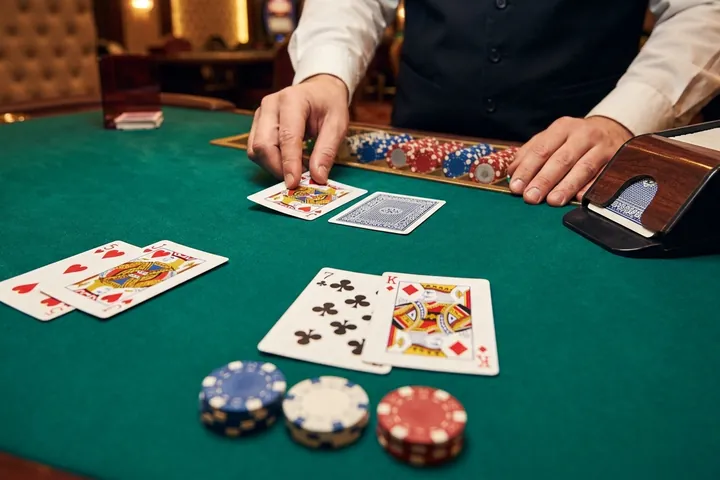
Deal and peek
Two cards to you, one up and one down to the dealer. The dealer peeks for a natural under a 10 or Ace, so surrender and doubles are only offered on live hands.

Surrender option
After the peek you may surrender a bad hand, giving up half your bet and ending the hand. Use it on the worst spots rather than gambling the whole stake.
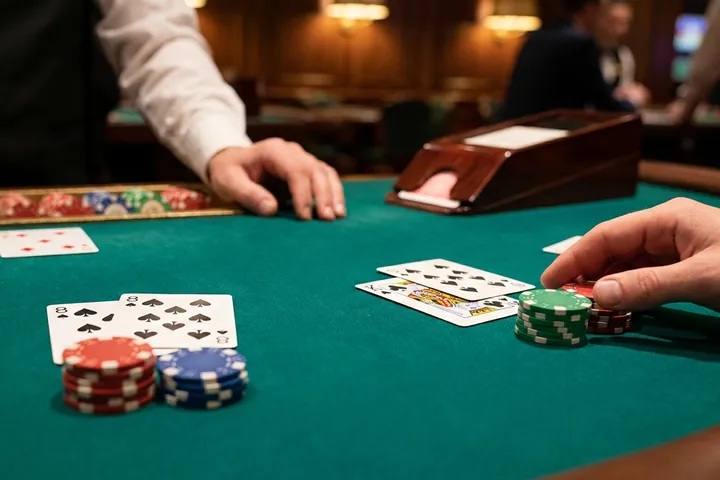
Double and split
Double down on any two cards, double after a split, and split most pairs up to four hands. Split Aces receive a single card each.
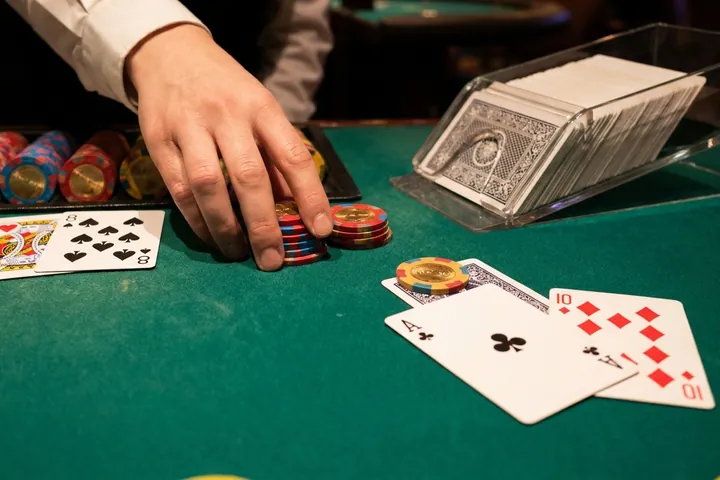
Dealer resolves
The dealer draws to 17 and stands on soft 17. Remaining hands are compared; ties push and the closer total to 21 collects.
The story behind Atlantic City
When New Jersey legalized casino gambling in Atlantic City in 1976, the state's Casino Control Commission wrote detailed rules for every game, including blackjack. Rather than let each casino set its own terms as had happened in Nevada, Atlantic City standardized a single, regulated ruleset - and that codified game became a recognized style of blackjack in its own right.
The regulators settled on an eight-deck shoe, the dealer standing on soft 17, doubling after splits, and, notably, late surrender. The combination was deliberately balanced: the deep shoe and surrender rule discouraged advantage players while still offering the public a fair, low-edge game. For decades the Boardwalk casinos ran this ruleset almost uniformly.
Because the rules were written down and consistent, “Atlantic City Blackjack” travelled well into the digital era as a clearly defined product. Online and app blackjack adopted the name to signal exactly what a player gets: eight decks, stand on soft 17, double after split, and the surrender option that sets it apart from the plain multi-deck game.
Winning Atlantic City strategy
💡 Top tip: Master the surrender chart - it is the whole point of Atlantic City rules: surrender hard 16 (not a pair of 8s) against a dealer 9, 10 or Ace, and hard 15 against a 10.
Smart plays, in order of importance
- Only surrender after confirming the dealer does not already have blackjack; because the dealer peeks, the offer is genuine and worth half your bet back.
- Split Aces and 8s every time, and thanks to double-after-split, split 2s, 3s and 7s against a dealer 2 through 7.
- Double 11 against any dealer up-card, 10 against 2 through 9, and 9 against 3 through 6.
- Stand on hard 17 and up, and stand on 13-16 against a dealer 2 through 6 to let the dealer risk busting.
- Never surrender a pair of 8s versus a 10 - split them instead, because two hands starting with 8 outperform folding.
- Ignore insurance; eight decks do nothing to make that side bet profitable.
Advanced Atlantic City tactics
- The correct surrender set is short and worth memorizing exactly: 16 vs 9/10/A and 15 vs 10 are the standard folds; adding 16 vs Ace and 17 vs Ace applies only when the dealer hits soft 17, which this game does not.
- Eight decks slightly reduce the chance of drawing a specific needed card, which marginally lowers the value of doubling into thin totals compared with a single deck.
- Because you can double after splitting, splitting low pairs against weak dealer cards sets up profitable doubles - split 4s against a 5 or 6, then double the resulting good hands.
- Surrender is a defensive weapon: over thousands of hands, reclaiming half your bet on the game's worst spots measurably outperforms playing them to the end.
- With the dealer standing on soft 17, hold on soft 18 against a dealer 2 through 8 and only hit it against a 9, 10 or Ace.
- Keep your unit size modest; eight-deck blackjack has slightly higher variance per shoe than fewer-deck games, so a larger bankroll cushions the swings.
- Do not surrender out of fear - it is correct on only a few precise hands, and folding good-but-scary totals like a hard 16 versus a dealer 7 simply donates chips.
Common Atlantic City mistakes to avoid
- Forgetting to surrender the right hands - folding hard 16 vs 9, 10 or Ace and hard 15 vs 10 for half your bet is the whole point of these rules.
- Surrendering good-but-scary hands like 16 vs 7 - surrender is correct on only a few precise spots, and over-folding donates chips.
- Surrendering a pair of 8s vs a 10 - split them instead, because two hands starting with 8 beat giving up half the bet.
- Skipping double-after-split opportunities - splitting low pairs against a weak dealer card sets up strong doubles you should take.
Atlantic City rule variations
Late vs. early surrender
Atlantic City uses late surrender, offered only after the dealer checks for blackjack. Early surrender - folding before the dealer peeks - is far more valuable to the player and consequently very rare.
Six-deck Atlantic City
Some tables run the same rules with six decks instead of eight, shaving a sliver off the house edge while keeping surrender and double-after-split.
No-surrender multi-deck
Drop the surrender rule and you have an ordinary eight-deck game with a slightly higher edge - a useful reminder of exactly how much surrender is worth.
Re-split limits
Rule sets differ on whether you can re-split Aces or split to more than four hands; the standard Atlantic City game caps most pairs at four hands and gives split Aces one card.
Dealer hits soft 17
A tougher regional variation makes the dealer draw to soft 17, which adds surrenders (16 and 17 versus an Ace) and increases the house edge by about 0.2%.
Atlantic City questions and answers
What is late surrender?
Late surrender lets you give up your hand and lose only half your bet, but only after the dealer has checked the hole card and does not have blackjack. It is the defining feature of Atlantic City rules and a genuine money-saver on the worst hands.
Which hands should I surrender?
The standard surrenders in this stand-on-soft-17 game are hard 16 (not two 8s) against a dealer 9, 10 or Ace, and hard 15 against a dealer 10. Everything else should be hit, stood, doubled or split as normal.
Why eight decks?
Atlantic City's regulated casinos traditionally deal blackjack from an eight-deck shoe. More decks make card counting harder and raise the house edge slightly, which the surrender rule and liberal doubling are there to offset.
Does the dealer hit or stand on soft 17?
The dealer stands on soft 17 in the classic Atlantic City game, the player-friendly rule. That keeps the edge low despite the larger shoe.
Can I double after splitting?
Yes. Double-after-split is allowed, which makes splitting low pairs against weak dealer cards more profitable because you can then double the strong hands you create.
Is it better or worse than single-deck blackjack?
On raw edge, single deck is a touch better, but single-deck games often pay only 6:5 on blackjack, which is far worse. A 3:2 eight-deck Atlantic City game with surrender frequently beats a 6:5 single-deck table in practice.
Should I surrender a pair of 8s against a 10?
No. Split the 8s instead. Two hands each starting with an 8 have a better expectation than surrendering, so 8s are always split even against a 10 or Ace.
What is the house edge?
With flawless basic strategy including correct surrender, the edge is roughly 0.35%. Skipping the surrenders where they apply pushes it noticeably higher, so the fold decisions genuinely matter.
How many times can I split?
You can split most pairs to a maximum of four hands. Split Aces are limited to one card each, so you cannot keep drawing after splitting Aces.
Does surrender apply to blackjacks?
No. If either you or the dealer has a natural blackjack the hand is resolved before surrender is offered, since the dealer peeks first. Surrender is only for live, playable hands.
Atlantic City guides & strategy
- When to surrender in blackjack
- Basic strategy and the surrender chart
- The complete blackjack basic-strategy guide
Still have a question about Atlantic City Blackjack? Browse the full blackjack FAQ, look up a term like classic or house edge in the blackjack glossary, or compare Atlantic City with the other games in the rules for every blackjack variant.
Last updated .