Play Single-Deck Blackjack
One deck, dealer hits soft 17 - the purest form of 21.Single-Deck Blackjack is free to play right here with no download, no signup and no real-money risk - you start every session with 1,000 play chips. One deck, dealer hits soft 17 - the purest form of 21. It is dealt from 1 deck, blackjack pays 3:2, and a basic-strategy player faces a house edge of about ~0.15% with 3:2 payouts.
Single-Deck Blackjack strips the game back to one 52-card deck, the original way twenty-one was dealt long before multi-deck shoes existed. With only one deck in play the removal of each card matters, so the raw house edge is the lowest of any blackjack format - as little as 0.15% when blackjack pays a true 3:2. In this version the dealer hits soft 17, a small concession that keeps the game honest. The catch to be aware of in real casinos is the payout. Because a fair single-deck game is so player-friendly, most brick-and-mortar tables cut the natural to 6:5, which quietly turns the best game in the house into one of the worst. Here the natural pays the proper 3:2, so you get single deck the way it is supposed to be: tight totals, quick shuffles, and strategy decisions that hinge on the exact cards already on the table.
How to Play Single-Deck Blackjack
In a nutshell: One deck, dealer hits soft 17 - the purest form of 21. It is dealt from 1 deck (52 cards), blackjack pays 3:2, and the house edge is about ~0.15% with 3:2 payouts.
The rules of Single Deck at a glance
| Dealer rule | Hits soft 17 |
|---|---|
| Decks | 1 standard 52-card deck |
| Blackjack pays | 3:2 |
| Double down | Any two cards |
| Split | Pairs (limited); split Aces get one card |
| Edge note | Lowest deck count - only when paid 3:2 |
| House edge | ~0.15% with 3:2 payouts |
| Difficulty | Lowest deck count |
| Family | Classic |
Step by step
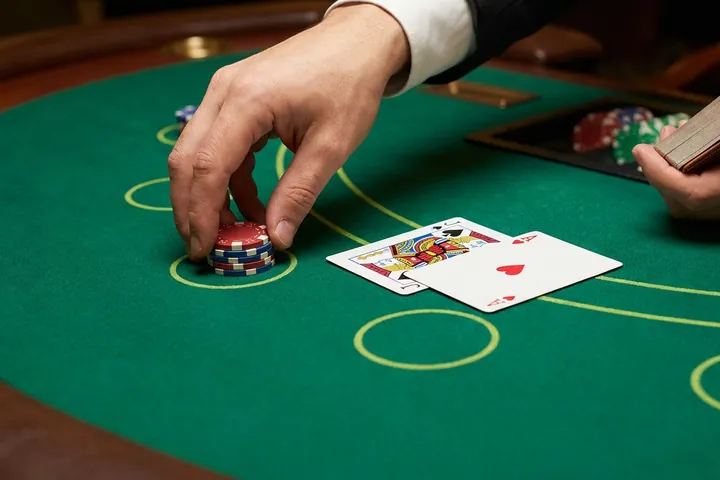
Objective
Beat the dealer's total without exceeding 21, drawing from a single 52-card deck that is reshuffled each hand.
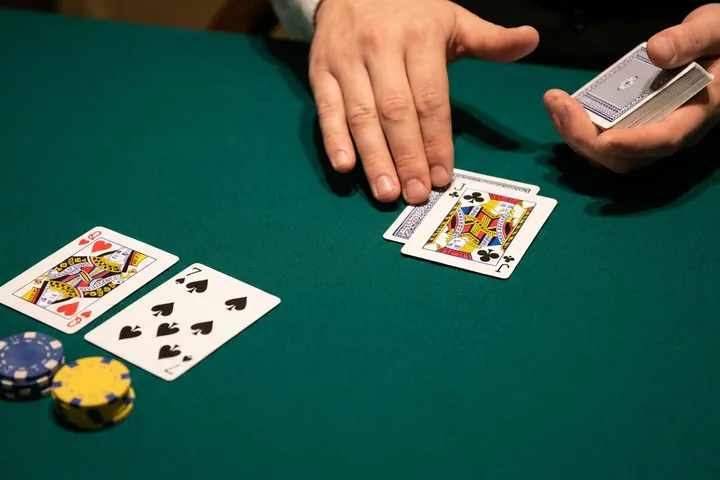
One-deck deal
You get two cards and the dealer takes one up-card and one hole card. With so few cards out, each rank you see meaningfully changes what remains.
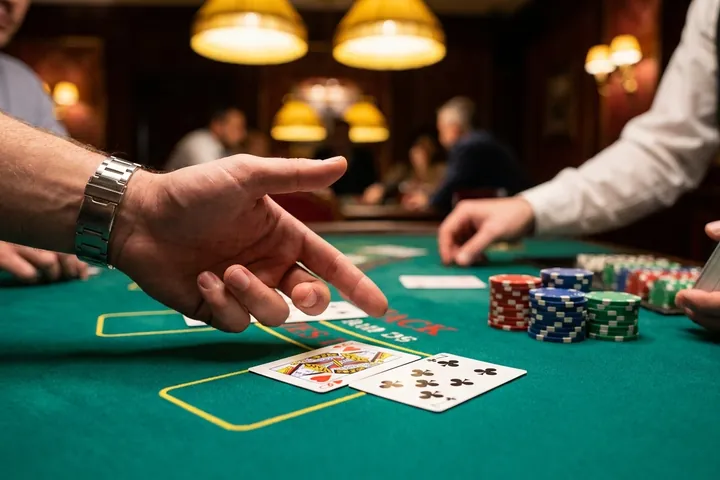
Play your hand
Hit, stand, or double down on any two cards. Single-deck rules often restrict doubling to certain totals in casinos, but here you may double freely on your first two cards.
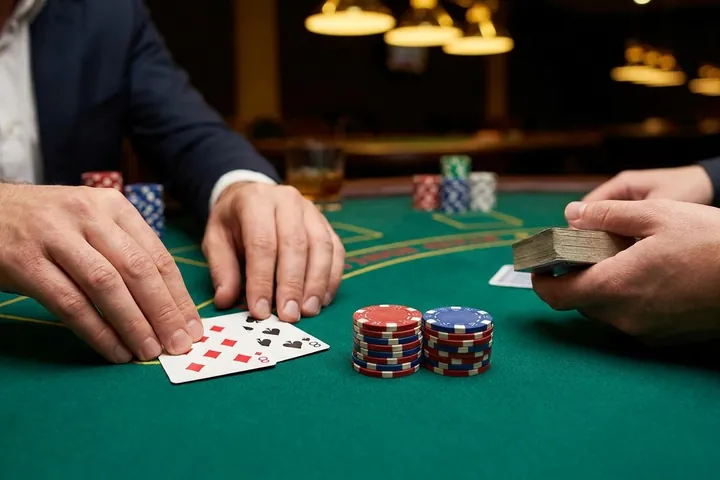
Split pairs
Split matching cards into separate hands, each with its own bet. Split Aces receive a single card each, the usual restriction.
Dealer hits soft 17
The dealer draws to 17 and, on a soft 17 (Ace-6), draws again. That single rule is the main thing keeping a one-deck game from being too easy.
The story behind Single Deck
Single-deck blackjack is the original form of the game. Before the 1960s, virtually all casino twenty-one was dealt from a single hand-held deck, with the dealer pitching cards face down to players. It was intimate, fast, and - though few realized it at the time - very close to an even game against a skilled player.
That changed with card counting. When Edward Thorp's 1962 Beat the Dealer showed that a counter could beat a single deck, casinos responded by adding decks and dealing from a shoe, because more cards make a running count far less powerful. The multi-deck shoe, now standard, was essentially a countermeasure aimed squarely at the single-deck game.
Single deck survived as a prestige offering, but with a twist: to keep it from being beatable, casinos increasingly paid 6:5 rather than 3:2 on blackjack, gutting the very advantage that made one deck special. A true 3:2 single-deck game is now a rarity worth seeking out, and digital versions preserve the honest payout that the original game always had.
Winning Single Deck strategy
💡 Top tip: Respect the 3:2 payout - a fair single-deck game only shines because blackjack pays 3:2; the same game at 6:5 has a house edge several times higher, so never trade it away.
Smart plays, in order of importance
- Adjust a few plays for one deck: with a single deck you can double on 11 versus an Ace and double 9 versus a 2, which are marginal in multi-deck games.
- Because the dealer hits soft 17, double soft 18 (Ace-7) against a dealer 3 through 6 and hit it against a 9, 10 or Ace.
- Split 8s and Aces always; with only one deck, splitting a pair of 7s against a dealer 8 also becomes correct because so many tens remain.
- Stand on hard 12 versus a dealer 4, 5 or 6, and hit it against a 2 or 3, exactly as in the multi-deck chart.
- Note the cards already dealt: in a single deck, seeing three tens leave the deck genuinely lowers your chance of a ten on the next card.
- Decline insurance - even in one deck the dealer's Ace makes a natural less than a third of the time.
Advanced Single Deck tactics
- Single-deck basic strategy has small but real deviations from the multi-deck chart; the biggest are doubling 11 against an Ace and doubling 8 against a 5 or 6, both correct here and not in a shoe game.
- With the dealer hitting soft 17, be more willing to double your soft 17s and 18s and to stand on a hard 17 you might otherwise fret over.
- Card removal is powerful in one deck: your own pair of 5s, for instance, has already stripped two low cards from the deck, subtly raising the chance the dealer or your double draws a ten.
- Because the deck reshuffles every hand here, treat each hand as independent - there is no running count to carry between deals as there would be in a hand-dealt casino single-deck shoe.
- The low base edge means variance, not the house, is your main opponent; flat betting keeps you in the game long enough for that thin edge to matter.
- Split 2s and 3s against a dealer 4 through 7 and 6s against 2 through 6; the extra tens left in a single deck make these low splits slightly stronger than in a shoe.
- Do not over-double just because the edge is low - a doubled 9 against a dealer 8 is still a losing bet, and single-deck math does not rescue a bad spot.
Common Single Deck mistakes to avoid
- Playing a 6:5 single-deck game as if it were a good bet - the 6:5 payout triples the edge, so only a true 3:2 single deck is worth it.
- Using the plain multi-deck chart - single deck has real deviations, like doubling 11 vs an Ace, that you should apply.
- Ignoring that the dealer hits soft 17 - adjust by doubling soft 18 more and being a touch bolder on your own 17s.
- Expecting deep splitting - classic single-deck rules limit splits and give split Aces one card, so plan your one split carefully.
Single Deck rule variations
3:2 vs. 6:5 payout
The single most important variable in single-deck blackjack. A 3:2 natural keeps the edge tiny; a 6:5 natural roughly triples it, turning the best game in the house into a trap despite the single deck.
Dealer stands on soft 17
A rarer, even friendlier single-deck rule where the dealer stands on all 17s, pushing the house edge close to zero or even into the player's favor with the right rules.
Restricted doubling
Traditional single-deck tables often limit doubling to 9, 10 and 11 (or 10 and 11 only), a restriction that raises the edge compared with double-on-anything rules.
Double-deck blackjack
The natural next step up - two decks dealt from a shoe, keeping much of single deck's low edge while making the game a little harder to count by hand.
No re-split, one card on Aces
Classic one-deck games are stingy about splitting, usually forbidding re-splits and giving one card to each split Ace, which trims the player's options.
Single Deck questions and answers
Why is single-deck blackjack considered the best?
With one deck the effect of each removed card is largest, and correct basic strategy faces a house edge as low as about 0.15% when blackjack pays 3:2. That is the lowest edge of any common blackjack format.
What is the catch with single deck in casinos?
The payout. Because a fair 3:2 single-deck game is so good for the player, most casinos pay only 6:5 on a natural to compensate, which raises the house edge to well over 1% and makes it a worse bet than a 3:2 six-deck game.
Does the dealer hit soft 17 here?
Yes. This single-deck game has the dealer draw on a soft 17 (Ace-6). Hitting soft 17 adds a little to the house edge and keeps a one-deck game from being unrealistically easy for the player.
Is the strategy the same as multi-deck?
Mostly, with a few single-deck-specific tweaks - you can double 11 against an Ace, double 8 against a 5 or 6, and split 7s against an 8, plays that are wrong in a shoe game because a single deck leaves proportionally more helpful cards.
Can I count cards in single deck?
In a hand-dealt casino single-deck game, counting is powerful because so few cards drive big swings in the odds. In digital single deck the deck is reshuffled every hand, so there is no count to keep - only perfect basic strategy helps.
How many times can I split?
In classic single-deck rules splitting is usually limited, often to one split (two hands), and split Aces receive one card each. This version follows the traditional restrained splitting rules of the one-deck game.
Is doubling restricted?
Traditional casino single-deck games sometimes limit doubling to totals of 9, 10 or 11. Here you may double on any two cards, which is the more generous and more common online rule.
Why does card removal matter more in one deck?
With 52 cards, taking out even one ten changes the make-up of the remaining deck noticeably. In an eight-deck shoe the same ten is one of thirty-two, so its removal barely moves the odds - which is why single-deck strategy differs.
Should I ever take even money?
No. Even money on your blackjack is the same losing insurance bet in disguise, and one deck does not change the underlying math that makes declining it the higher-value choice.
What is the house edge in this game?
With 3:2 blackjacks, dealer hitting soft 17, and this version's doubling and splitting rules, a basic-strategy player faces roughly 0.15% to 0.3%. Playing every marginal single-deck deviation correctly keeps it at the low end.
Single Deck guides & strategy
- Is single-deck blackjack really better?
- 3:2 vs 6:5: what blackjack should pay
- The complete blackjack basic-strategy guide
Still have a question about Single-Deck Blackjack? Browse the full blackjack FAQ, look up a term like classic or house edge in the blackjack glossary, or compare Single Deck with the other games in the rules for every blackjack variant.
Last updated .