Play Double Exposure Blackjack
Both dealer cards face up - but the dealer wins every tie.Double Exposure Blackjack is free to play right here with no download, no signup and no real-money risk - you start every session with 1,000 play chips. Both dealer cards face up - but the dealer wins every tie. It is dealt from 6 decks, blackjack pays 1:1, and a basic-strategy player faces a house edge of about ~0.7% with adjusted strategy.
Double Exposure Blackjack turns the game's core secret inside out: both of the dealer's cards are dealt face up. You get to see the dealer's exact total before making a single decision, which feels like an enormous advantage - and it would be, if the rules did not claw it all back. To pay for that transparency the dealer wins all ties (except a tie of two blackjacks), and a natural blackjack pays only even money instead of 3:2. Those two compensations are severe, so Double Exposure is a game of precise, information-rich decisions. Knowing the dealer holds a 16 versus a 20 completely changes whether you hit, stand or double, and the correct strategy is its own chart built around the dealer's visible total rather than a single up-card. Play it by feel and the tie rule punishes you; play it by the adjusted book and it is a fascinating, skill-heavy variant.
How to Play Double Exposure Blackjack
In a nutshell: Both dealer cards face up - but the dealer wins every tie. It is dealt from 6 decks (312 cards), blackjack pays 1:1, and the house edge is about ~0.7% with adjusted strategy.
The rules of Double Exposure at a glance
| Dealer cards | Both dealt face up |
|---|---|
| Ties | Dealer wins all ties except two blackjacks |
| Blackjack pays | 1:1 (even money) |
| Decks | 6 standard 52-card decks |
| Insurance | Not applicable - dealer hand is visible |
| Strategy | Own chart keyed to the dealer's total |
| House edge | ~0.7% with adjusted strategy |
| Difficulty | See-everything twist |
| Family | 21 Variants |
Step by step
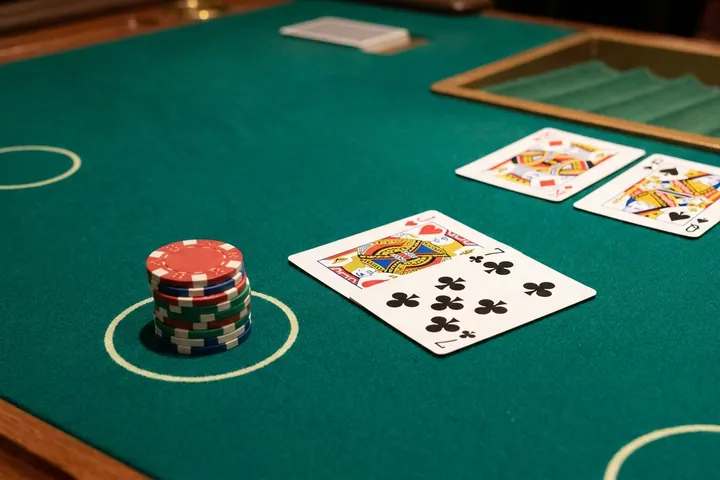
Both cards up
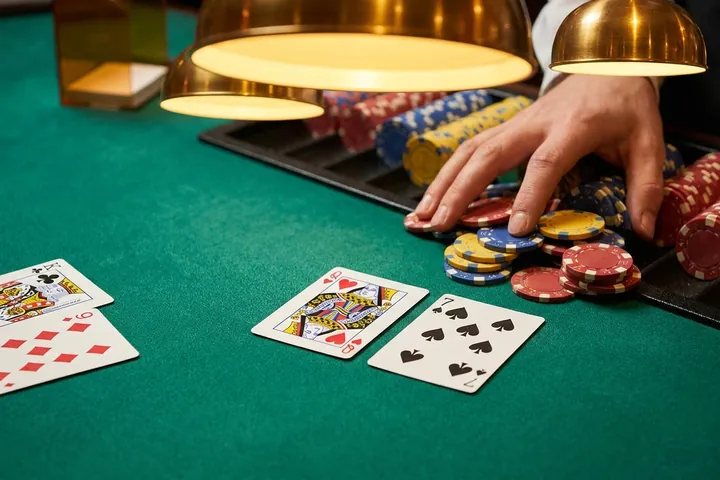
The dealer's two starting cards are both dealt face up, so you know the dealer's exact total before you act - a complete reversal of standard blackjack.
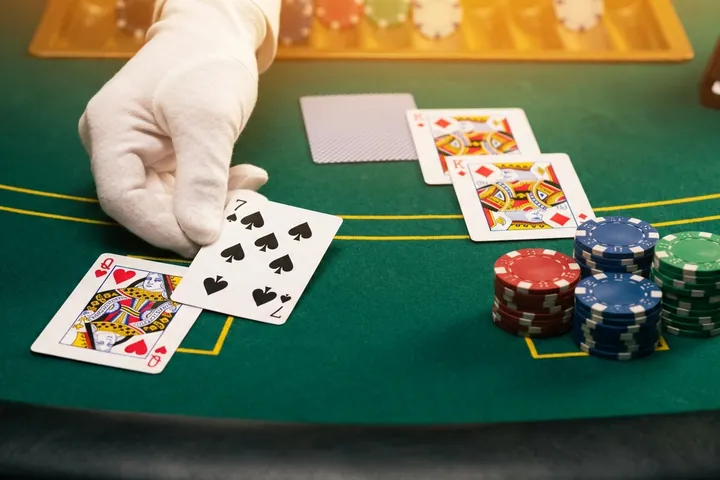
Dealer wins ties
To pay for that information, the dealer wins all ties except when both hold a blackjack. A pushed 20 that would tie in classic blackjack is a loss here.
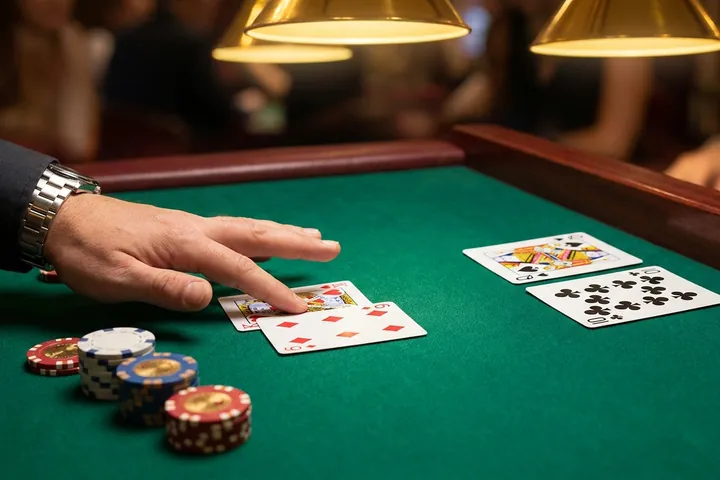
Even-money blackjack
A natural blackjack pays only 1:1, not 3:2, another cost of seeing the dealer's hand. Two blackjacks tie, which is the one tie you do not lose.
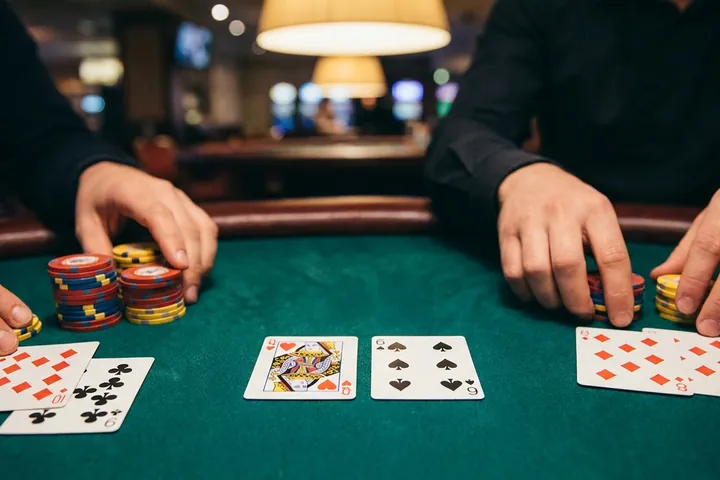
Play the visible total
Hit, stand, double or split based on the dealer's known total. Against a dealer 20 you must push toward 21; against a dealer 16 you can stand on far lower totals.
Dealer completes
After you act, the dealer draws to 17 by the house rule. Because you already saw both cards, there is no hole-card surprise at the end.
The story behind Double Exposure
Double Exposure grew out of a mathematical question: how much is the dealer's hidden hole card actually worth? In the 1970s gaming theorist Richard Epstein explored a version of blackjack in which both dealer cards were face up, calling it Zweikartenspiel. The answer turned out to be “a great deal” - so much that other rules had to be twisted hard to keep the game profitable for a casino.
Bob Stupak's Vegas World casino popularized a commercial version in the late 1970s and 1980s, and the format later spread under names like Double Exposure and Face Up 21. Designers settled on two compensating rules - the dealer winning ties and blackjack paying even money - as the price of showing both cards. Different casinos tuned the details, but that trade always defined the game.
Double Exposure endures partly as entertainment and partly as a teaching tool: it makes vivid, in a single deal, exactly how valuable the concealed hole card is in ordinary blackjack. Digital versions preserve the face-up dealer and the compensating rules, giving players a chance to test whether perfect information is really the advantage it appears to be.
Winning Double Exposure strategy
💡 Top tip: Throw out normal basic strategy - Double Exposure needs its own chart keyed to the dealer's full total, because you are reacting to a known hand, not guessing behind an up-card.
Smart plays, in order of importance
- When the dealer shows a made total of 17 or higher, you must try to beat it outright: hit stiff hands you would normally stand, because standing simply loses to the dealer's known total.
- When the dealer holds a stiff 12-16, stand on much lower totals than usual - even a hard 12 can stand, because the dealer must draw and may bust while a tie would lose anyway.
- Double aggressively when the dealer shows a busting total (12-16) and you hold a strong two-card hand, since you already know the dealer is in trouble.
- Because blackjack pays only even money, do not overvalue a natural - it is a nice 1:1 win, not the 3:2 bonus that anchors ordinary blackjack.
- Remember the dealer wins ties, so aim to beat, not match: a hand that would push in classic blackjack is a loss here and must be improved when possible.
- There is no insurance decision to agonize over - you can already see whether the dealer has blackjack, so the bet is meaningless.
Advanced Double Exposure tactics
- Split more often against a known dealer stiff: seeing the dealer stuck on 13-16 makes splitting pairs like 2s, 3s, 6s and 7s correct because you are pressing bets against a hand likely to bust.
- Against a known dealer 17, hit hands up through a hard 16 without hesitation - standing ties or loses, and only a draw to 18-21 wins, so you must take the card.
- Against a known dealer 20, your only winning outs are 21; play those hands as near-lost and avoid committing extra chips by doubling into a wall.
- Value soft hands highly - with an Ace you can chase the dealer's exact total safely, drawing to beat a known 18 or 19 where a hard hand would have to risk busting.
- The even-money blackjack and dealer-ties rules together cost far more than the visible cards are worth by naive reckoning, which is why disciplined chart play, not intuition, is essential.
- Because you never face a hidden dealer natural, doubling and splitting carry no blackjack-sweep risk, so commit fully when the visible dealer total justifies it.
- Watch the specific tie-of-blackjacks exception; it is the only push in the game, so a natural is a guaranteed non-loss even when it only pays even money.
Common Double Exposure mistakes to avoid
- Playing normal basic strategy - you can see both dealer cards, so decisions are keyed to the dealer's exact total, not a single up-card.
- Standing on a stiff hand against a made dealer 17 or higher - you must hit to try to beat a total you can already see will win.
- Overvaluing a blackjack - naturals pay only even money here, so a two-card 21 is a nice win, not the usual 3:2 bonus.
- Forgetting the dealer wins ties - a hand that would push in classic blackjack is a loss, so aim to beat the dealer, never to match.
Double Exposure rule variations
Tie rules
The harshest and most common rule gives the dealer all ties except two blackjacks; friendlier tables let the player win or push certain ties, notably a tie on 17, which meaningfully lowers the edge.
Blackjack payout
Most Double Exposure games pay blackjack at even money, but a few pay 2:1, which is a large improvement for the player and changes how much you value a natural.
Dealer hits vs. stands on soft 17
As in any blackjack variant, whether the dealer draws to soft 17 shifts several borderline decisions and adjusts the house edge by roughly 0.2%.
Restricted doubling and splitting
Some Double Exposure tables limit doubling to 9-11 or forbid re-splitting, tightening the game to compensate for more generous tie or payout rules.
Face Up 21
A closely related branded version with slightly different tie handling and payouts; the core idea - both dealer cards exposed - is identical, so the strategy is nearly the same.
Double Exposure questions and answers
What is the twist in Double Exposure?
Both of the dealer's cards are dealt face up, so you always know the dealer's exact total before deciding how to play. It is the opposite of standard blackjack, where the dealer's hole card is hidden.
If I can see both cards, why isn't it easy?
Because two harsh rules pay for the information: the dealer wins all ties except two blackjacks, and a natural blackjack pays only even money instead of 3:2. Those compensations more than balance the visible cards, so the game still favors the house without correct play.
Do I need a special strategy?
Yes. Double Exposure has its own strategy chart based on the dealer's total rather than a single up-card. You hit and stand at very different points - hitting stiff hands against a made dealer total and standing low against a dealer stiff.
Why does the dealer win ties?
The tie rule is the main way the game recovers the edge it gives up by exposing both cards. Since you can steer toward the dealer's exact total, letting ties push would make the game beatable, so the dealer takes all ties but the two-blackjack case.
How much does a blackjack pay?
Only 1:1 (even money) in the standard Double Exposure game, not the usual 3:2. This lower payout, combined with the tie rule, is why seeing the dealer's cards does not simply hand players the advantage.
Is there insurance?
No meaningful insurance decision exists, because both dealer cards are visible - you can already see whether the dealer has a blackjack, so there is nothing to insure against.
What is the house edge?
With correct Double Exposure strategy the edge is roughly 0.7% or a little higher, depending on the exact tie and payout rules. Playing ordinary blackjack strategy against it is far worse, because the decisions are genuinely different.
Do the dealer's face-up cards change how I split?
Very much. Seeing the dealer stuck on a stiff 13-16 makes several splits correct that would be marginal blind, because you are multiplying your bets against a hand you know is likely to bust.
Does the dealer hit or stand on soft 17?
Rules vary by table; many Double Exposure games have the dealer hit soft 17, and some stand. The rules panel shows the setting, and it shifts a few borderline plays as in any blackjack variant.
Where did Double Exposure come from?
It was devised by gaming mathematician Richard Epstein in the 1970s (originally as “Zweikartenspiel”) and later spread to casinos as Double Exposure or Face Up 21. It endures as a clever demonstration of how much the hidden hole card is really worth.
Double Exposure guides & strategy
- How Double Exposure works
- Playing the dealer's visible total
- The complete blackjack basic-strategy guide
Still have a question about Double Exposure Blackjack? Browse the full blackjack FAQ, look up a term like 21 variants or house edge in the blackjack glossary, or compare Double Exposure with the other games in the rules for every blackjack variant.
Last updated .