Play Blackjack Switch
Play two hands and swap the top cards between them.Blackjack Switch is free to play right here with no download, no signup and no real-money risk - you start every session with 1,000 play chips. Play two hands and swap the top cards between them. It is dealt from 6 decks, blackjack pays 1:1; dealer 22 pushes, and a basic-strategy player faces a house edge of about ~0.6% with switch strategy.
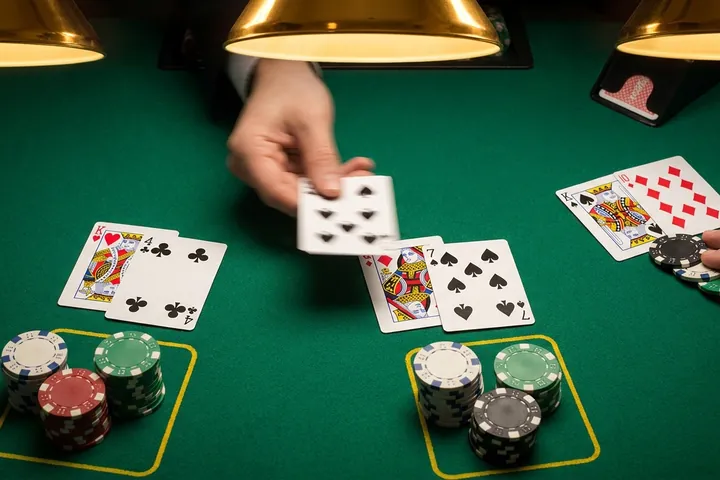
Blackjack Switch deals you two hands at once and hands you a remarkable power: you may switch the second card between them. If you are dealt, say, a 10-6 and a 5-10, swapping the sixes and fives turns two mediocre hands into a 20 and an 11 - a huge improvement. You place equal bets on both hands, decide whether to switch, then play each hand out normally against the dealer. Because switching is so strong, two compensating rules pay for it. Blackjack pays even money rather than 3:2, and a dealer hard 22 is not a bust but a push against every non-busted player hand. That “push 22” rule is subtle but far-reaching: it steals many hands you would otherwise win, and it is why Blackjack Switch has its own strategy that stands and doubles at different points than ordinary blackjack. Master the switch decision and the push-22 adjustments and it is a low-edge, uniquely tactical game.
How to Play Blackjack Switch
In a nutshell: Play two hands and swap the top cards between them. It is dealt from 6 decks (312 cards), blackjack pays 1:1; dealer 22 pushes, and the house edge is about ~0.6% with switch strategy.
The rules of Switch at a glance
| Hands | Two hands, equal bets, swap second cards once |
|---|---|
| Dealer 22 | Pushes vs. all non-busted hands (not a bust) |
| Blackjack pays | 1:1; switched 21 is an ordinary 21 |
| Decks | 6 standard 52-card decks |
| Double / split | Allowed on each hand after switching |
| Strategy | Own chart plus a switch-selection skill |
| House edge | ~0.6% with switch strategy |
| Difficulty | Two-hand twist |
| Family | Multi-Hand |
Step by step
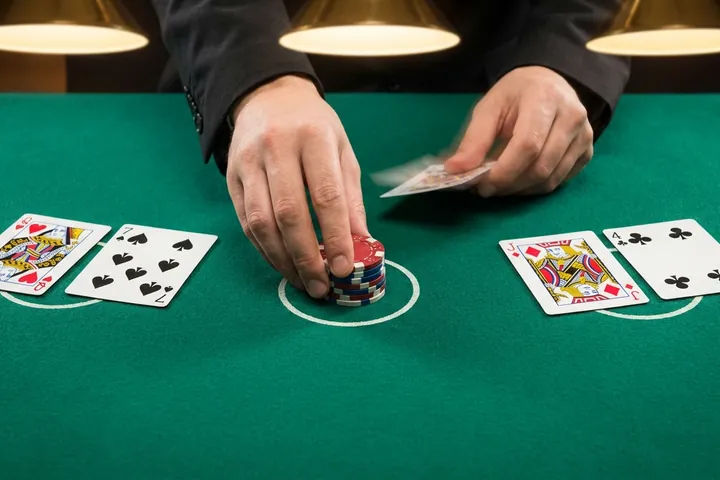
Two hands, equal bets
You place two bets of the same size and are dealt two separate two-card hands, all face up. Everything that follows revolves around those two hands.
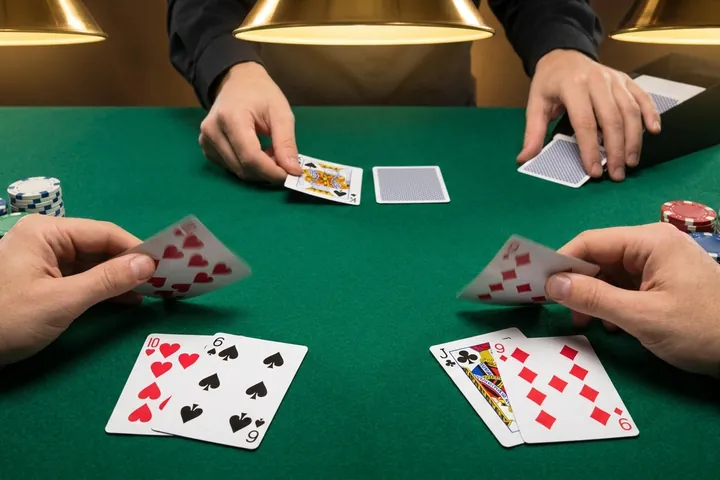
Switch the second cards
You may swap the second card dealt to each hand between them - once. Use it to build the strongest pair of totals, for example turning 10-6 and 5-10 into 20 and 11.
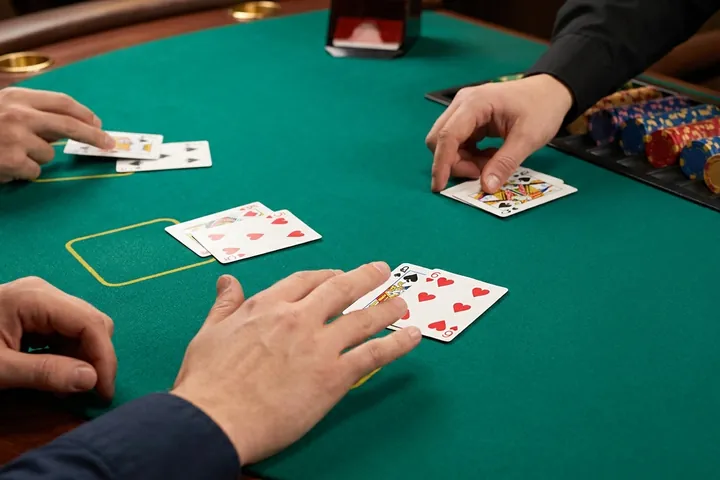
Dealer 22 pushes
If the dealer reaches a hard 22 it does not bust; instead it pushes against all your non-busted hands. This rule pays for the powerful switch and shapes the whole strategy.
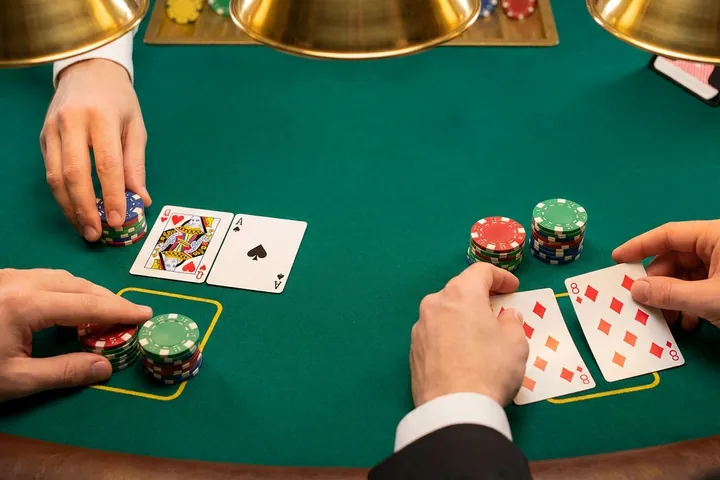
Even-money blackjack
A natural blackjack pays 1:1 here, not 3:2 - another cost of the switch power. A switched 21 counts as an ordinary 21, not a natural.
Play both hands
After switching, play each hand independently - hit, stand, double or split - then the dealer draws to 17. Each hand is settled separately against the dealer.
The story behind Switch
Blackjack Switch was invented by Geoff Hall, a British game designer, who was struck by how often players wished they could swap cards between two hands they were playing side by side. He turned that wish into a formal mechanic: deal two hands, let the player exchange the second card of each, and watch the strategy blossom. The game was patented and introduced to casinos in the mid-2000s.
The design problem was that switching is enormously powerful - powerful enough to hand players the advantage if left unchecked. Hall's solution was elegant: pay blackjack at even money and, crucially, make a dealer hard 22 a push rather than a bust. The push-22 rule quietly recovers the edge the switch gives away, and it does so in a way that keeps the game feeling like blackjack while demanding fresh strategy.
Blackjack Switch became one of the most successful blackjack variants of its generation, spreading through casinos internationally and onto digital platforms. It is frequently cited as a model of good variant design: a bold new player power balanced by a subtle, mathematically precise rule, producing a game that is both novel and fair.
Winning Switch strategy
💡 Top tip: Learn to evaluate the switch first - it is the game's core skill. Compare the two possible arrangements and choose the one with the higher combined expectation, not just the biggest single total.
Smart plays, in order of importance
- Generally switch to make a strong standing hand (17-21) plus a good doubling hand (10 or 11) rather than two mediocre middles.
- Adjust for push 22 by standing more: because a dealer 22 pushes instead of busting, hard totals like 16 and even some 15s are worth standing on less often, and you press fewer marginal hits.
- Double a bit more conservatively than in classic blackjack - the push-22 rule reduces the value of doubling into a dealer stiff, since the dealer's bust equity is lower.
- Value a switched hand that reaches 21 as a plain 21, not a blackjack, because it only pays even money and does not beat a dealer's natural - so don't overcommit chasing it.
- Split and play the two original wagers as a single tactical unit; sometimes the best switch sets up one hand to split and the other to stand.
- Skip insurance as always; the push-22 and even-money rules already define the edge, and insurance only adds to the house's take.
Advanced Switch tactics
- The push-22 rule costs the player heavily and specifically devalues standing on stiff totals against a dealer stiff, because the dealer now has a 22 “escape” - Switch basic strategy hits several 16s a normal chart would stand.
- When choosing a switch, favor arrangements that give you a doubleable 11 against a dealer 2-9, since the extra chips on a strong double outweigh a marginally higher standing total.
- Because a two-card 21 pays only even money, an arrangement that makes one natural-looking 21 is worth less than it appears; a 20 plus an 11 often beats a blackjack plus a stiff.
- Play soft hands with the push-22 rule in mind: standing on soft 18 against a dealer stiff is stronger than usual because the dealer's bust is partly neutralized by the 22 push.
- Track both hands' interaction with the dealer's single up-card; unlike multi-hand blackjack where hands are independent, in Switch your switch decision ties their fates together.
- Doubling after a switch is fully allowed and often the point of the switch - build an 11 or 10 specifically so you can double it against a weak dealer card.
- Manage the higher hand-to-hand variance of playing two bets at once; a bad switch spot can lose both wagers, so the switch decision deserves real thought, not reflex.
Common Switch mistakes to avoid
- Choosing the switch by biggest single total - compare the combined expectation of both arrangements, favoring a strong hand plus a doubleable 10 or 11.
- Standing on stiff totals as in normal blackjack - the push-22 rule means you should hit several 16s that a standard chart would stand.
- Overvaluing a switched 21 - it counts as an ordinary 21 paying even money, not a blackjack, so do not overcommit chasing it.
- Forgetting you must play two equal bets - a careless switch can lose both hands, so give the switch decision real thought.
Switch rule variations
Push 22 vs. push 21
The standard rule pushes dealer 22; some rare versions push on a different total or handle the dealer's would-be bust differently, which significantly changes the edge and the strategy.
Blackjack payout
Even money is standard, but a few tables pay a switched game's naturals differently or add a bonus, altering how much a two-card 21 is worth.
Super Match side bet
A popular optional wager that pays based on pairs or better among your four dealt cards; it is separate from the main game and carries its own higher house edge.
Dealer hits vs. stands on soft 17
As in any blackjack game, the dealer's soft-17 rule shifts several borderline decisions and moves the edge by roughly 0.2%.
Number of decks
Blackjack Switch is usually dealt from six or eight decks; fewer decks marginally help the player, as in standard blackjack, though the push-22 rule dominates the math.
Switch questions and answers
How does switching work?
You are dealt two hands and may swap the second card of one hand with the second card of the other, exactly once. It lets you rearrange four cards into the strongest two totals - for instance turning 10-6 and 5-10 into a 20 and an 11.
Do I have to switch?
No. Switching is optional. On many deals your original two hands are already better than any swap, so you simply decline and play them as dealt.
What is the push-22 rule?
If the dealer's hand totals a hard 22, it does not bust - it pushes against all of your hands that have not busted. This rule is the main way the game pays for the powerful switch, and it removes many wins you would otherwise collect.
Why does blackjack pay even money?
Even-money naturals are the second compensation for switching. A 3:2 payout combined with the switch power would make the game too good for players, so Blackjack Switch pays 1:1 on blackjack instead.
Does a switched 21 count as blackjack?
No. A 21 you create by switching is treated as an ordinary 21, not a natural blackjack. It still wins against lower totals but does not earn any blackjack bonus and does not beat a dealer's natural.
Do I need two bets to play?
Yes. Blackjack Switch requires two equal bets, one on each of your two hands. You cannot play a single hand, because the switch mechanic depends on having two hands to swap between.
Is the strategy different from normal blackjack?
Yes, in two ways. First you must learn how to choose the best switch, and second the push-22 rule changes many hit, stand and double decisions - you hit some stiff totals more and double a little less than a standard chart advises.
What is the house edge?
With correct switch selection and push-22-adjusted strategy the edge is roughly 0.6%, competitive with mainstream blackjack. Playing it with ordinary blackjack instincts, however, gives up a lot to the push-22 rule.
Who invented Blackjack Switch?
It was created by Geoff Hall and introduced to casinos in the 2000s. The switch mechanic was a genuinely novel idea, and the push-22 rule was Hall's clever solution for keeping such a powerful player option fair.
Can I split as well as switch?
Yes. After deciding on the switch you play each hand normally, including splitting pairs and doubling down. Sometimes the best switch is chosen specifically to set up a profitable split or double on one of the hands.
Switch guides & strategy
- Blackjack Switch and the push-22 rule
- How to choose the best switch
- The complete blackjack basic-strategy guide
Still have a question about Blackjack Switch? Browse the full blackjack FAQ, look up a term like multi-hand or house edge in the blackjack glossary, or compare Switch with the other games in the rules for every blackjack variant.
Last updated .