Play Chinese Blackjack (Ban-Luck)
The festive Malaysian and Chinese game of 21 - Ban-Ban, Ban-Luck and the five-card win.Chinese Blackjack (Ban-Luck) is free to play right here with no download, no signup and no real-money risk - you start every session with 1,000 play chips. The festive Malaysian and Chinese game of 21 - Ban-Ban, Ban-Luck and the five-card win. It is dealt from 2 decks, ban-ban 3:1, ban-luck 2:1, five-card 2:1, and a basic-strategy player faces a house edge of about ~0.5-1.5% (simplified rules).
Chinese Blackjack, known as Ban-Luck in Malaysia and Singapore, is a lively festive cousin of twenty-one traditionally dealt around Lunar New Year. This digital version is a streamlined take on the classic banking game. It uses two decks, and both of the banker's cards stay hidden until every player has finished acting, so you play blind against the banker just as you would around a family table. The banker draws to 17 and hits soft 17. What sets Ban-Luck apart are its special hands. Ban-Ban, a pair of Aces, is the top hand and pays 3:1. Ban-Luck, a two-card 21 made of an Ace and a ten-value card, pays 2:1. And a five-card hand totaling 21 or less wins outright and also pays 2:1, rewarding a patient string of small cards. Equal totals simply push. In the traditional game the Ace shifts between 1, 10 and 11 depending on your card count, a flavor this simplified version keeps light and easy to follow.
How to Play Chinese Blackjack (Ban-Luck)
In a nutshell: The festive Malaysian and Chinese game of 21 - Ban-Ban, Ban-Luck and the five-card win. It is dealt from 2 decks (104 cards), ban-ban 3:1, ban-luck 2:1, five-card 2:1, and the house edge is about ~0.5-1.5% (simplified rules).
The rules of Ban-Luck at a glance
| Banker cards | Both hidden until players finish |
|---|---|
| Ban-Ban (two Aces) | Top hand, pays 3:1 |
| Ban-Luck (two-card 21) | Pays 2:1 |
| Five-card 21-or-less | Wins, pays 2:1 |
| Ties | Push |
| Decks | 2 standard 52-card decks |
| House edge | ~0.5-1.5% (simplified rules) |
| Difficulty | Ban-Ban & five-card rules |
| Family | European & International |
Step by step
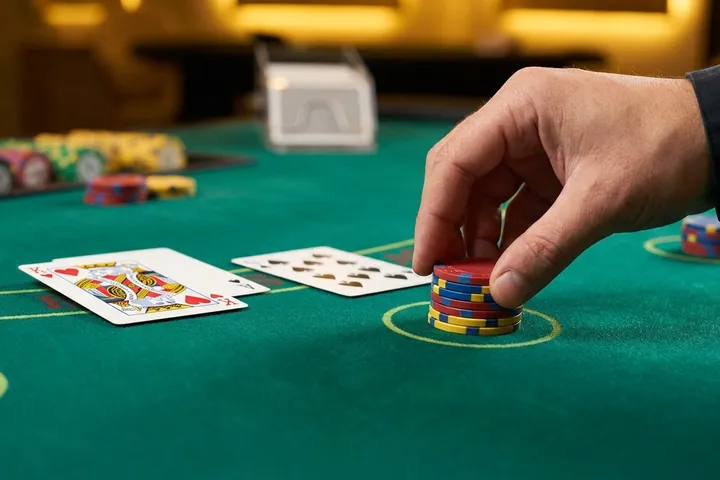
Festive game of 21
Chinese Blackjack, or Ban-Luck, is a Lunar New Year favorite across Malaysia, Singapore and China. This is a simplified two-deck version of the traditional banking game, so you aim to beat the banker at 21.
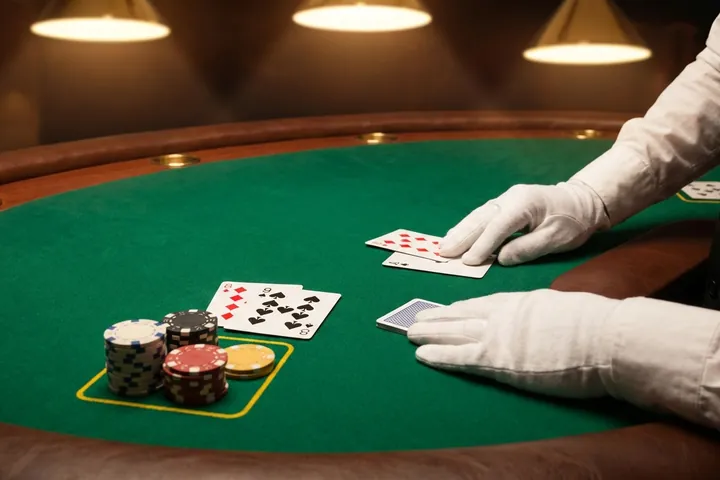
Banker plays blind
Both of the banker's cards stay face down until every player has finished. You never see the banker's hand while you decide, so each choice is made blind against a hidden total.
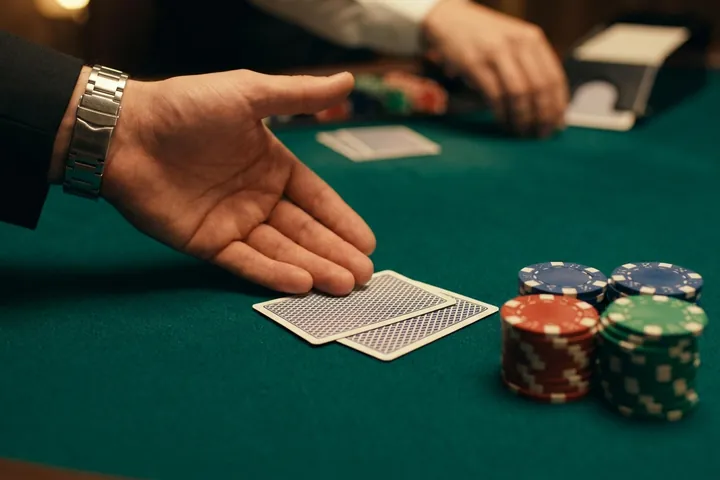
Special winning hands
Ban-Ban, a pair of Aces, is the highest hand and pays 3:1. Ban-Luck, a two-card 21 of an Ace and a ten-value card, pays 2:1. Both beat an ordinary 21.
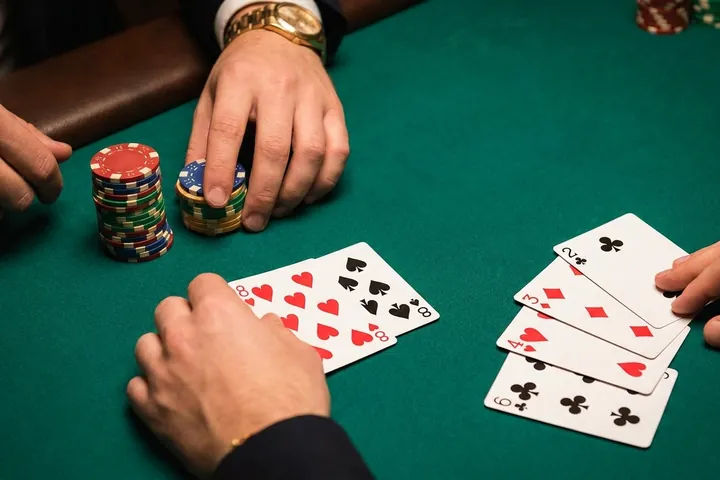
The five-card win
A hand that reaches five cards totaling 21 or less wins outright and pays 2:1, rewarding patient drawing of small cards even when your total is modest.
Banker draws and settles
After players finish, the banker reveals both cards and draws to 17, hitting soft 17. Higher totals win, and equal points push with no money changing hands.
The story behind Ban-Luck
Chinese Blackjack, most widely known as Ban-Luck, is a traditional gambling game long associated with Lunar New Year celebrations across China, Malaysia, Singapore and the wider Chinese diaspora. Families and friends gather to play it during the holidays, when casual gambling is a customary part of the festivities, making it as much a social ritual as a card game.
The game descends from the same family of twenty-one games found around the world, but it developed its own distinct rules. A rotating banker takes on the players, both banker cards stay hidden, and special hands - the two-Ace Ban-Ban and the two-card-21 Ban-Luck - carry premium payouts. Its most unusual feature is the flexible Ace, whose value can change with the number of cards in a hand, giving skilled players extra ways to reshape a total.
Because it was traditionally a home game rather than a casino offering, Ban-Luck's exact rules and payouts vary from region to region and family to family. This digital version is a streamlined take that preserves the game's signature hands and festive spirit while smoothing the many local variations into a single, easy-to-play format.
Winning Ban-Luck strategy
💡 Top tip: Chase the special hands - Ban-Luck rewards aggressive drawing far more than plain blackjack, because a two-card Ban-Luck pays 2:1, a five-card 21-or-under also pays 2:1, and a pair of Aces is the jackpot Ban-Ban.
Smart plays, in order of importance
- Hold onto a pair of Aces when the rules let you - it is Ban-Ban, the top hand paying 3:1, so a two-Ace start is a premium hand to keep rather than split away.
- Draw toward the five-card win when you hold three or four small cards and a safe total, since reaching five cards at 21 or less wins outright and pays double.
- Value any two-card 21 highly - an Ace with a ten-value card is Ban-Luck and pays 2:1, better than an ordinary 21, so it is a hand to celebrate, not to break up.
- Because the banker plays blind and draws to 17, treat a marginal total as a likely loss and push to improve it, keeping in mind that equal points only push.
- Weigh the flexible Ace: in the traditional game an Ace can count as 1, 10 or 11 depending on your number of cards, so read your hand's best Ace value before deciding to draw.
- Manage your bankroll for swings - the 2:1 and 3:1 special payouts and the aggressive drawing style make outcomes streakier than cautious blackjack.
Advanced Ban-Luck tactics
- Ban-Luck strategy is total-and-count based rather than up-card based, because the banker's cards are hidden; you decide to draw or stand purely from your own hand and how many cards you hold.
- The five-card rule reshapes drawing: with four small cards and a low total, taking a fifth card that keeps you at 21 or under wins outright, so you draw in spots a blackjack player would never consider.
- In the full traditional game the Ace's value flexes with your card count - often 10 or 11 on two cards, but only 1 on hands of four or more cards - which changes what totals are reachable, and this streamlined version keeps that idea gentle.
- Because equal points push rather than lose, you can stand a little more readily on a solid total than in games where the banker wins ties, since matching the banker at least saves your stake.
- A two-card Ban-Luck and a pair-of-Aces Ban-Ban are the hands worth protecting above all - never break them up chasing a marginally higher total, because their bonus payouts outweigh a plain 21.
- Since the banker hits soft 17, expect the banker to reach strong totals often, which is another reason to draw aggressively toward your own 21 or a five-card winner rather than sitting on a stiff hand.
- Remember this is a simplified digital take: the traditional home game layers on banker rotation and side stakes that shift the odds, so treat the streamlined payouts here as the version you are actually playing.
Common Ban-Luck mistakes to avoid
- Playing cautiously like blackjack - Ban-Luck rewards drawing, since a two-card Ban-Luck, a five-card 21-or-under and a pair of Aces all pay bonuses.
- Breaking up a pair of Aces - two Aces is Ban-Ban, the top hand paying 3:1, so keep it rather than splitting the jackpot away.
- Missing the five-card win - with four small cards and a safe total, drawing a fifth card at 21 or less wins outright and pays 2:1.
- Forgetting the flexible Ace - in the traditional game an Ace can count as 1, 10 or 11 by your card count, so read its best value before you draw.
Ban-Luck rule variations
Regional rules
Because Ban-Luck is mainly a home game, its rules and payouts differ across Malaysia, Singapore, China and beyond. The special hands are common everywhere, but exact odds and side stakes vary from one family or region to the next.
Flexible Ace values
A hallmark of the traditional game is the Ace that counts as 1, 10 or 11 depending on the number of cards held. Some versions apply these values strictly, while streamlined ones simplify them.
Banker rotation
In the home game the banker role passes between players under set rules, adding a social, strategic layer. Digital and casino versions replace this with a fixed house banker, as in this game.
Payout scales
The bonus payouts for Ban-Ban, Ban-Luck and the five-card hand can differ by table and tradition. Common values are 3:1 for Ban-Ban and 2:1 for the others, but some versions reward higher hands or extra cards more.
Six-card and higher hands
Some regional rules extend the five-card win to reward six- or seven-card hands even more, encouraging deeper draws in the spirit of the five-card trick found in other twenty-one games.
Ban-Luck questions and answers
What is Chinese Blackjack?
Chinese Blackjack, called Ban-Luck in Malaysia and Singapore, is a festive relative of twenty-one traditionally played around Lunar New Year. Players aim to beat the banker at 21, but the game adds special hands and a flexible Ace that give it a character all its own.
What is Ban-Ban?
Ban-Ban is a pair of Aces, the highest hand in the game. It pays 3:1 and beats everything, including an ordinary two-card 21. Being dealt two Aces is the luckiest start in Ban-Luck.
What is Ban-Luck?
Ban-Luck is a two-card 21 - an Ace together with a ten-value card, which is the same as a natural blackjack. It pays 2:1 here and beats any ordinary 21, ranking just below Ban-Ban.
How does the five-card hand work?
If you reach five cards with a total of 21 or less, you win outright and are paid 2:1, no matter what the banker holds. It rewards patiently drawing small cards, so a five-card 18 or 20 can be a strong winner.
Why are the banker's cards hidden?
In Chinese Blackjack both of the banker's cards stay face down until every player has finished acting. Playing blind against the banker is part of the traditional game, so your decisions rest on your own hand rather than on a visible banker card.
What happens on a tie?
Equal totals push, meaning your bet is simply returned and no money changes hands. That is friendlier than games where the banker wins all ties, since matching the banker at least keeps your stake safe.
How is the Ace valued?
In the traditional game the Ace is flexible: it can count as 1, 10 or 11, often depending on how many cards you hold - typically higher on a two-card hand and only 1 on a hand of four or more cards. This simplified version keeps that idea in a light, easy-to-follow form.
Does the banker hit soft 17?
Yes. In this version the banker draws to 17 and hits a soft 17, then stands. Because you cannot see the banker's cards while you play, you draw toward a strong total or a special hand rather than reacting to a banker up-card.
Is this the same as the traditional home game?
It is a streamlined digital version. The traditional Ban-Luck played at home adds a rotating banker role, extra Ace-counting rules and side stakes that vary by region. This version keeps the signature Ban-Ban, Ban-Luck and five-card hands while simplifying the rest.
How many decks are used?
This version is dealt from two decks. The traditional game can use one or more decks depending on the number of players, but two decks keep the digital game smooth while preserving the feel of the festive original.
Ban-Luck guides & strategy
- How blackjack variants differ worldwide
- How you win at blackjack
- The complete blackjack basic-strategy guide
Still have a question about Chinese Blackjack (Ban-Luck)? Browse the full blackjack FAQ, look up a term like european & international or house edge in the blackjack glossary, or compare Ban-Luck with the other games in the rules for every blackjack variant.
Last updated .