Play 21+3 Blackjack
Standard blackjack plus a three-card poker side bet with the dealer's up-card.21+3 Blackjack is free to play right here with no download, no signup and no real-money risk - you start every session with 1,000 play chips. Standard blackjack plus a three-card poker side bet with the dealer's up-card. It is dealt from 6 decks, blackjack 3:2; 21+3 up to 100:1, and a basic-strategy player faces a house edge of about ~0.5% main game (side bet ~3%).
21+3 Blackjack is regular six-deck blackjack with a poker twist available on the side. The main game is standard in every way: the dealer stands on soft 17, blackjacks pay 3:2, and you double, split and hit at the usual low house edge of about half a percent. The extra is an optional 21+3 side bet that looks at your first two cards together with the dealer's up-card and pays if those three cards make a poker hand. The name says it all: 21 (blackjack) plus 3 (a three-card poker hand). A Flush pays 5:1, a Straight 10:1, Three of a kind 30:1, a Straight flush 40:1, and the top hand - a suited Three of a kind - pays 100:1. Like other side bets it settles on its own, before you play out your blackjack hand, and it carries a house edge around 3%, well above the base game, so it is a fun add-on rather than a value play.
How to Play 21+3 Blackjack
In a nutshell: Standard blackjack plus a three-card poker side bet with the dealer's up-card. It is dealt from 6 decks (312 cards), blackjack 3:2; 21+3 up to 100:1, and the house edge is about ~0.5% main game (side bet ~3%).
The rules of 21+3 at a glance
| Base game | Standard 6-deck, dealer stands soft 17 |
|---|---|
| Blackjack pays | 3:2 |
| Side bet cards | Your two cards plus the dealer's up-card |
| Top hand | Suited three of a kind - pays 100:1 |
| Other pays | Straight flush 40:1, trips 30:1, straight 10:1, flush 5:1 |
| Side bet edge | Around 3% - well above the base game |
| House edge | ~0.5% main game (side bet ~3%) |
| Difficulty | Optional poker side bet |
| Family | Side Bets |
Step by step
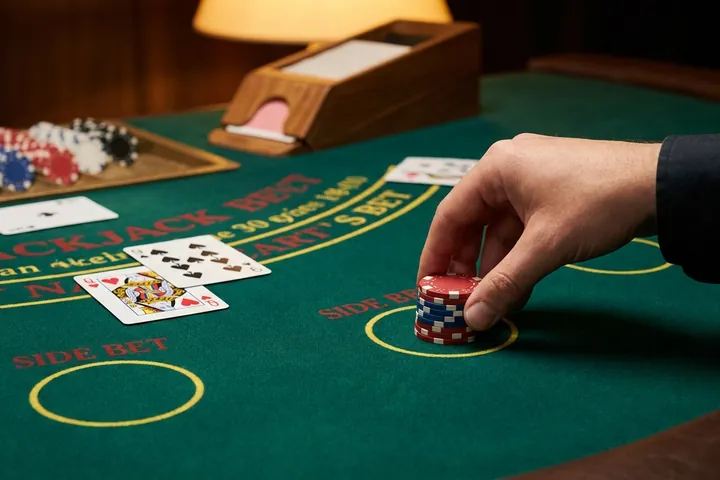
Place the side bet
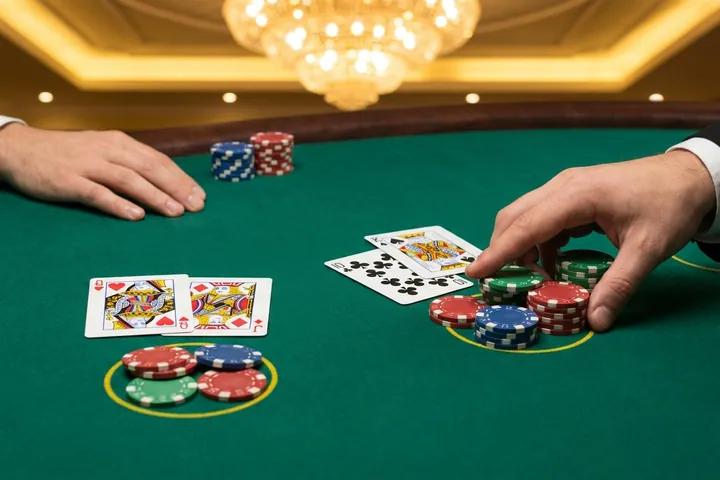
Alongside your normal blackjack wager, you may add an optional 21+3 bet before the deal. It uses your two cards plus the dealer's up-card - three cards in all.
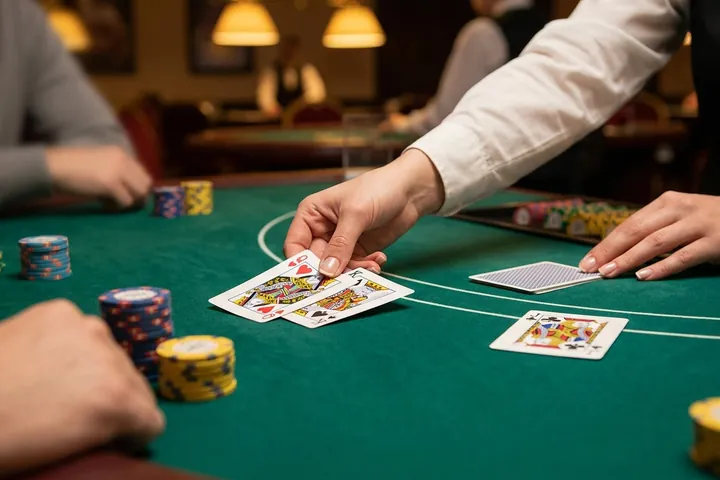
Make a poker hand
If those three cards form a Flush, Straight, Three of a kind, Straight flush, or suited Three of a kind, the side bet wins. It pays on the strength of the three-card poker hand.
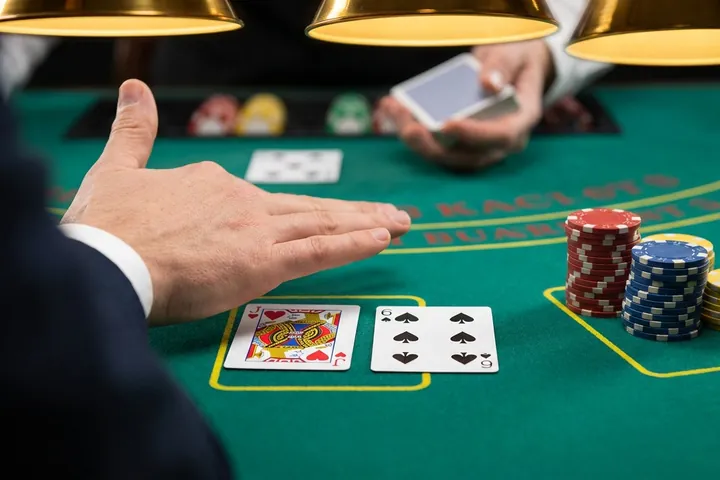
The paytable
A Flush pays 5:1, a Straight 10:1, Three of a kind 30:1, a Straight flush 40:1, and a suited Three of a kind - three cards of the same rank and suit - pays the top prize of 100:1.
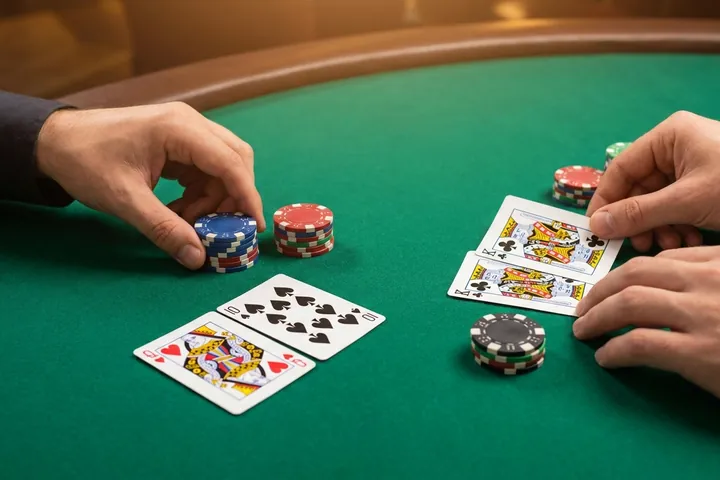
Play the main hand
Whatever the side bet does, you then play your blackjack hand normally against the dealer, with a natural paying the standard 3:2.
Side bet is independent
The 21+3 bet is settled as soon as the up-card is known, separately from the main hand. You can win one, both or neither.
The story behind 21+3
The 21+3 side bet was invented in the mid-2000s by Derek Webb, the British game designer best known for creating Three Card Poker. The idea was to graft the excitement of his popular three-card game onto a blackjack table, using cards that were already on the felt - the player's two and the dealer's up-card - so no new deal was needed.
Layering a poker hand onto blackjack proved a hit. Players enjoyed the extra way to win and the eye-catching top payout, while casinos welcomed a side bet whose house edge comfortably exceeded the base game. Because it reused existing cards, 21+3 was simple for dealers to run and quickly appeared on tables around the world.
Over time the paytable evolved. Early versions paid a flat rate on any three-card poker hand, but modern 21+3 uses a tiered schedule that rewards rarer hands more, topping out at 100:1 for a suited three of a kind. Digital blackjack adopted the bet enthusiastically, and today it sits alongside Perfect Pairs as one of the two most common blackjack side bets in the world.
Winning 21+3 strategy
💡 Top tip: Play the blackjack hand by flawless basic strategy and keep 21+3 as a side amusement - your genuine edge sits in the main game near half a percent, so never let the poker bet change a single blackjack decision.
Smart plays, in order of importance
- Bet the 21+3 wager small, because its house edge near 3% is several times the base game's and will erode your bankroll if you press it hard.
- Do not adjust your hit, stand, double or split for the side bet - it is settled the moment the dealer's up-card appears, long before you act.
- Split and double exactly as basic strategy dictates; a 21+3 win is a bonus stacked on top, never a reason to misplay your cards.
- Treat a big 21+3 payout as a lucky spike, not a trend - the three-card poker odds reset every deal, so past hands tell you nothing about the next one.
- If you like the side bet, fund it from a small fixed pool each session and stop when it runs out, apart from your main blackjack money.
- Decline insurance on the main hand as usual; along with the side bet it is a higher-edge wager that correct blackjack play never requires.
Advanced 21+3 tactics
- The 21+3 bet draws on three cards - your two plus the dealer's up-card - which is why it can make straights and flushes a two-card pair bet cannot, and why its top suited-three-of-a-kind prize pays a full 100:1.
- Its roughly 3% house edge sits well above the base game, and the exact figure depends on the paytable and deck count, so check the payouts before you decide how much, if anything, to stake.
- The side bet is self-contained: it does not touch the base game's odds, so a basic-strategy player gains no edge in blackjack by making it and loses none by skipping it.
- Because the main game is standard six-deck stand-soft-17 blackjack, play it by the ordinary chart - double 11 against everything but an Ace, split Aces and 8s always, stand on stiff totals against a weak dealer card.
- Ignore any feeling that a flush or straight is overdue; each three-card hand is independent, and chasing the side bet with bigger bets only speeds up its high edge.
- Keep the side stake a small fraction of your main bet so a cold run on 21+3 cannot wipe out the slow, steady value you are grinding on the base game.
- Bank your 21+3 winnings rather than rolling them into larger side bets, since every extra dollar on the side wager works against you at that 3% rate.
Common 21+3 mistakes to avoid
- Adjusting your blackjack play for the side bet - 21+3 is decided as soon as the up-card shows, so your hit, stand, double and split choices should follow basic strategy exactly.
- Staking the side bet heavily - its edge near 3% is far above the base game, so bet it small and treat any win as a lucky bonus.
- Chasing an overdue flush or straight - the three-card odds reset each deal, so pressing bigger side bets only speeds up the house edge.
- Neglecting the base game - the main hand holds your genuine low edge, so play it well and keep 21+3 as a separate, small-stakes thrill.
21+3 rule variations
Flat vs. tiered paytable
The original 21+3 paid a single flat rate, often 9:1, on any qualifying three-card hand. The modern tiered schedule pays more for rarer hands, up to 100:1, and is the version almost everyone plays today.
Payout differences
Casinos tune the exact 21+3 payouts, so the top prize and the rate on flushes and straights can vary. A poorer schedule raises the already sizable house edge, so the paytable is worth a look.
Number of decks
More decks make suited hands and trips slightly more likely, shifting the odds and edge. The bet is offered on six- and eight-deck games most often, with payouts set to the shoe.
Combined with Perfect Pairs
Many tables let you place 21+3 and Perfect Pairs together, choosing one, both or neither. The two side bets are independent, each with its own paytable and house edge.
Base-game rules
The blackjack underneath can differ - soft-17 rule, deck count, surrender - which changes the base house edge on its own, separate from the fixed odds of the 21+3 side bet.
21+3 questions and answers
What is the 21+3 side bet?
It is an optional wager that combines your first two cards with the dealer's up-card to make a three-card poker hand. If those three cards form a flush or better, the bet wins. The name means 21 - blackjack - plus a 3-card poker hand.
What poker hands pay?
A Flush pays 5:1, a Straight 10:1, Three of a kind 30:1, a Straight flush 40:1, and a suited Three of a kind - three cards of the same rank and suit - pays the top 100:1. There is no pair payout; a flush is the minimum winning hand.
Which three cards are used?
Your two dealt cards plus the dealer's face-up card. That is what lets the bet form straights and flushes, since three cards from mixed sources can line up in rank or suit in ways a two-card bet cannot.
Is the base game normal blackjack?
Yes. Beneath the side bet, 21+3 is standard six-deck blackjack with the dealer standing on soft 17, 3:2 naturals, and all the usual options, at a house edge around half a percent.
What is the house edge on the side bet?
Around 3%, depending on the exact paytable and number of decks. That is far higher than the base game, which is why the 21+3 bet is best treated as fun rather than as a way to improve your odds.
Does the side bet affect my blackjack play?
Not at all. It is settled as soon as the dealer's up-card is shown, before you make any decisions, so your hit, stand, double and split choices should follow basic strategy exactly as in any blackjack game.
Can I win the side bet and lose the hand?
Yes, easily. The two wagers are independent. Your three cards might make a flush and win 21+3 while your blackjack hand loses to the dealer - or you might win both, or lose both. Each is settled separately.
What is the best 21+3 hand?
A suited Three of a kind - all three cards the same rank and the same suit, such as three Kings of hearts - is the top hand and pays 100:1. It is very rare, which is exactly why the payout is so large.
Should I bet 21+3 on every hand?
Only if you enjoy it and keep the stake small. Its high house edge means betting it every hand steadily costs you, so many players make it occasionally for the thrill or skip it and stick to the low-edge base game.
How is 21+3 different from Perfect Pairs?
Perfect Pairs pays on your two cards forming a pair, while 21+3 uses your two cards plus the dealer's up-card to make a three-card poker hand. 21+3 can hit straights, flushes and trips, and it tops out at a larger 100:1 payout.
21+3 guides & strategy
- What a blackjack side bet is
- Basic strategy still runs the main hand
- The complete blackjack basic-strategy guide
Still have a question about 21+3 Blackjack? Browse the full blackjack FAQ, look up a term like side bets or house edge in the blackjack glossary, or compare 21+3 with the other games in the rules for every blackjack variant.
Last updated .