Play Double Deck Blackjack
Two decks, dealer stands on soft 17 - shoe-game rules, tighter odds.Double Deck Blackjack is free to play right here with no download, no signup and no real-money risk - you start every session with 1,000 play chips. Two decks, dealer stands on soft 17 - shoe-game rules, tighter odds. It is dealt from 2 decks, blackjack pays 3:2, and a basic-strategy player faces a house edge of about ~0.35% with basic strategy.
Double Deck Blackjack sits right between the single-deck classic and the big multi-deck shoe. It is dealt from just two 52-card decks, the dealer stands on all 17s including soft 17, and a natural blackjack pays the full 3:2. You can double down on any two cards, double after splitting, split most pairs into as many as four hands, and the dealer peeks for a natural under a ten or Ace, so your doubles and splits are safe from a hidden blackjack. With only two decks in play, the removal of each card matters more than it does in a six- or eight-deck game, which nudges the odds gently toward the player. That is why the house edge here is around 0.35% with correct basic strategy, noticeably tighter than the shoe games most casinos push. It plays fast, feels close to single deck, and is a favorite of players hunting the best realistic odds at the table.
How to Play Double Deck Blackjack
In a nutshell: Two decks, dealer stands on soft 17 - shoe-game rules, tighter odds. It is dealt from 2 decks (104 cards), blackjack pays 3:2, and the house edge is about ~0.35% with basic strategy.
The rules of Double Deck at a glance
| Dealer rule | Stands on all 17s |
|---|---|
| Decks | 2 standard 52-card decks |
| Blackjack pays | 3:2 |
| Double down | Any two cards; double after split allowed |
| Split | Most pairs to 4 hands; split Aces get one card |
| Dealer peek | Yes, under a 10 or Ace |
| House edge | ~0.35% with basic strategy |
| Difficulty | Low deck count |
| Family | Classic |
Step by step
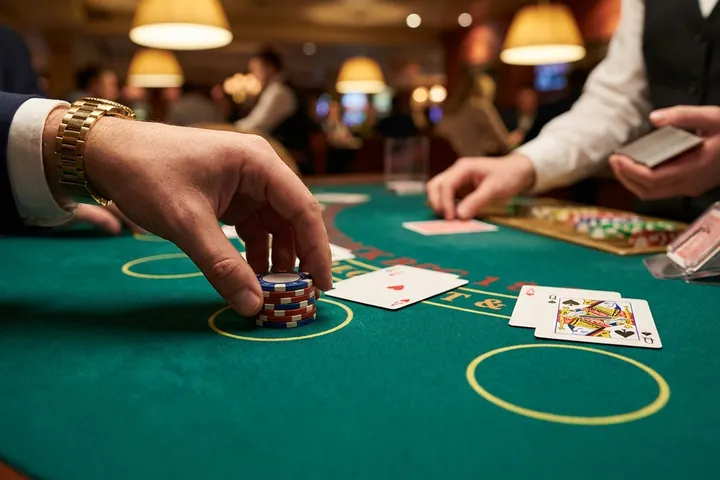
Objective
Beat the dealer's total without going past 21, drawing from a two-deck shoe. A two-card Ace plus a ten-value card is a natural blackjack and pays 3:2.
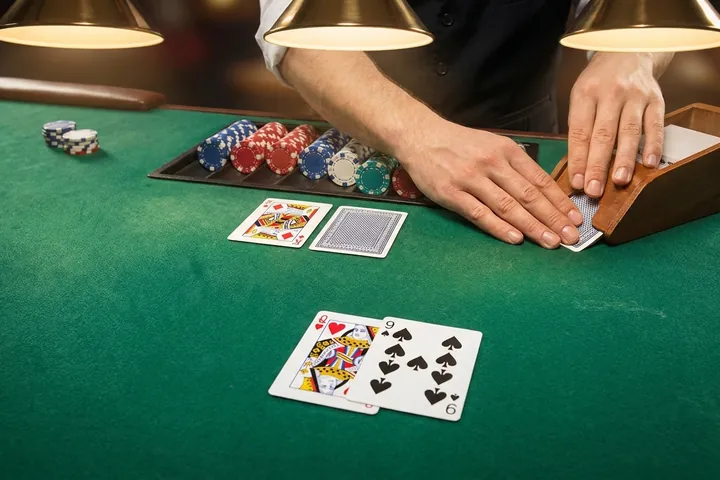
Two-deck deal
You get two cards face up while the dealer takes one up-card and one hole card. The dealer peeks for blackjack under a 10 or Ace before you commit extra chips.
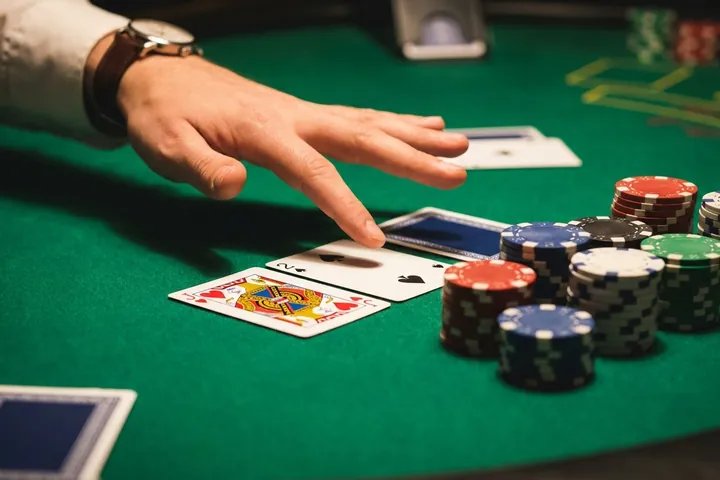
Act on your hand
Hit, stand, or double down on any first two cards. The fewer decks make doubling into strong totals a little more rewarding than in a big shoe.
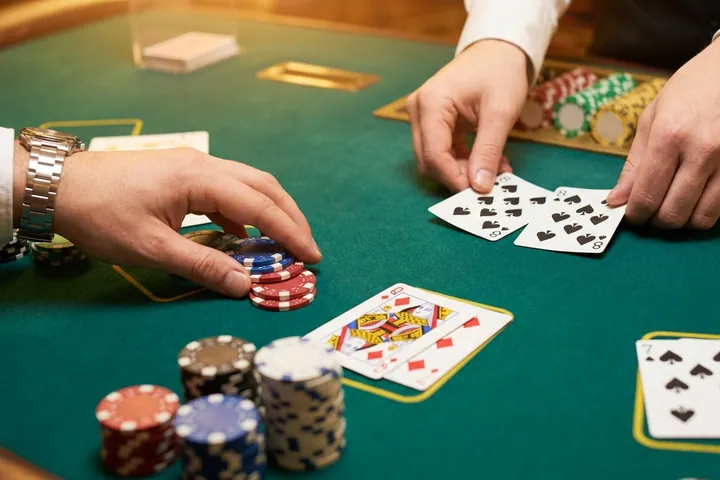
Split and re-split
Split most matching pairs into up to four hands, and double after splitting. Aces are the exception - each split Ace receives just one card.
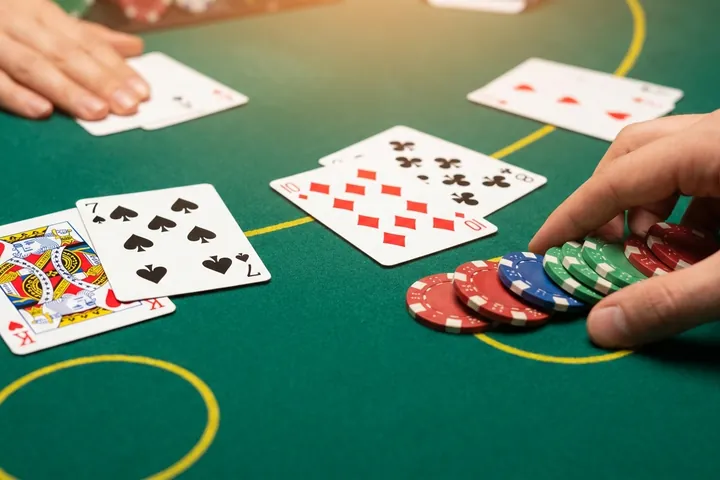
Dealer stands on 17
Once you finish, the dealer draws to 17 and stands on every 17, soft or hard. The higher unbusted hand wins and equal totals push.
The story behind Double Deck
Double-deck blackjack is a direct descendant of the original single-deck game and the casinos' response to card counters. After Edward Thorp's 1962 book Beat the Dealer showed that a single deck could be beaten, houses began adding decks to blunt the count. Two decks was the gentle first step - harder to track than one deck, but still far tighter for the house than a deep shoe.
For decades the double-deck game held a special place on the casino floor. It was usually pitched by hand, dealt face down, and offered players odds nearly as good as single deck without the extreme vulnerability to counting. Skilled players sought it out, and casinos watched it closely, often shuffling early to protect their edge.
Digital blackjack preserves the two-deck game as a distinct, player-friendly product. With the shoe reshuffled every hand there is nothing to count, but the low deck count still delivers its mathematical gift: a house edge around a third of a percent, a full 3:2 payout, and strategy just a hair different from the standard chart.
Winning Double Deck strategy
💡 Top tip: Learn the two-deck basic strategy chart cold - it is close to the standard chart but has a few double-deck tweaks that turn this already low edge into some of the best realistic odds on the floor.
Smart plays, in order of importance
- Double 11 against every dealer up-card including an Ace, since two decks leave enough tens to make that double a clear winner.
- Double 9 against a dealer 2 through 6 and double 10 against 2 through 9, pressing your bet whenever the dealer looks weak.
- Because double-after-split is allowed, split 2s, 3s and 7s against a dealer 2 through 7, and split 6s against 2 through 6.
- Always split Aces and 8s, and never split 5s or 10s - a pair of 5s is a strong 10 to double, and two 10s already make a winning 20.
- Stand on hard 12 against a dealer 4, 5 or 6 but hit it against a 2 or 3, and stand on every hard 17 no matter what the dealer shows.
- Skip insurance and even money; two decks do nothing to make that side bet pay its way, and it only lifts the house edge.
Advanced Double Deck tactics
- Double-deck strategy differs from six-deck play in a handful of spots - most notably doubling 11 versus an Ace and doubling 9 versus a 2 - because fewer decks shift the card-removal odds in your favor.
- The dealer peek means a doubled or split bet can never be swept by a hidden blackjack, so commit fully against a 10 or Ace whenever the chart calls for it.
- Since the dealer stands on soft 17, hold on soft 18 against a dealer 2 through 8 and only hit it into a 9, 10 or Ace.
- With two decks, seeing several tens leave the shoe genuinely thins your chance of the next ten, a real effect that is far weaker in an eight-deck game.
- Use your four-hand split limit against weak dealer cards - re-splitting a third or fourth pair of 8s stacks more money on a good situation.
- Keep your bet flat and your session long; the low edge only pays off over many hands, so steady stakes beat any betting system.
- Do not over-double marginal totals just because the edge is thin - a doubled 9 against a dealer 7 is still a losing play the two-deck math will not rescue.
Common Double Deck mistakes to avoid
- Using the six-deck chart out of habit - two-deck play has a few tweaks, like doubling 11 versus an Ace, that you should apply to capture the low edge.
- Playing a 6:5 double-deck table as a good bet - the 6:5 payout roughly triples the edge, so only a true 3:2 game is worth your time.
- Assuming the dealer hits soft 17 - here the dealer stands on soft 17, so use the stand-17 chart, not a hits-soft-17 one.
- Skipping doubles after splitting - double-after-split is allowed, so split low pairs against weak dealer cards and double the strong totals you build.
Double Deck rule variations
Dealer hits soft 17
A tougher version has the dealer draw on soft 17, which raises the house edge by roughly 0.2% and shifts a few borderline doubles and stands. The Vegas Downtown game is the classic hits-soft-17 double-deck ruleset.
Double after split on or off
Whether you may double after splitting is a meaningful rule. Allowing it, as this game does, makes several low-pair splits correct and lowers the edge; removing it tightens the game noticeably.
6:5 blackjack payout
Some casinos cut the natural to 6:5 on double-deck tables, which roughly triples the house edge and erases the benefit of the low deck count. Always check that blackjack pays a true 3:2.
Re-split Aces
A few double-deck tables let you re-split Aces or draw more than one card to a split Ace, a rare bonus that trims the edge a little further in the player's favor.
Hand-pitched vs. shoe
Live double-deck games are often pitched by hand with the cards face down, while digital tables deal face up from a small shoe. The dealing style changes the feel, not the odds.
Double Deck questions and answers
What makes double-deck blackjack special?
It is dealt from just two decks instead of the usual six or eight. Fewer decks make each card that leaves the shoe matter more, which lowers the house edge and brings the game close to the friendly odds of single deck while still paying a full 3:2.
Does the dealer hit or stand on soft 17?
The dealer stands on soft 17 (Ace-6) in this game, the more player-friendly rule. Standing on soft 17 keeps the edge low and is one reason the two-deck game plays so well for the player.
What is the house edge?
With correct basic strategy the edge is roughly 0.35%, tighter than the six-deck standard. That means about 35 cents lost per $100 wagered on average, among the best odds you will find at any blackjack table.
Is the strategy the same as six-deck blackjack?
Almost, with a few double-deck adjustments. The biggest are doubling 11 against a dealer Ace and doubling 9 against a 2, plays that are marginal or wrong in a big shoe but correct with only two decks in play.
Can I double after splitting?
Yes. Double-after-split is allowed, which makes several low-pair splits correct - split a low pair against a weak dealer card, then double the strong two-card total you build on the new hand.
How many hands can I split to?
You can split most pairs up to four hands. Aces are the exception: you may split them but each Ace receives only one more card, so you cannot keep drawing on a split Ace.
Does the dealer check for blackjack?
Yes. The dealer peeks at the hole card for a natural when showing a 10 or an Ace. If the dealer has blackjack the hand ends at once, so you never lose extra chips from a double or split against a hidden natural.
Is double deck better than single deck?
Single deck has a slightly lower edge on paper, but true 3:2 single-deck tables are rare and often pay only 6:5. A 3:2 double-deck game with these rules is usually the best low-deck game you can actually find.
Can I count cards in this game?
In a live two-deck game counting is powerful because so few cards swing the odds. In a digital version the shoe is reshuffled every hand, so there is no count to keep - flawless basic strategy is the only edge that helps.
Why do fewer decks help the player?
Fewer decks raise the chance of drawing a blackjack, improve your doubles, and make card removal more meaningful. Each effect is small, but together they shave the house edge below what a six- or eight-deck shoe offers.
Double Deck guides & strategy
- How many decks blackjack uses
- Basic strategy for a two-deck game
- The complete blackjack basic-strategy guide
Still have a question about Double Deck Blackjack? Browse the full blackjack FAQ, look up a term like classic or house edge in the blackjack glossary, or compare Double Deck with the other games in the rules for every blackjack variant.
Last updated .