Play Pontoon Card Game
The British 21 - twist, stick and buy, with both dealer cards hidden.Pontoon is free to play right here with no download, no signup and no real-money risk - you start every session with 1,000 play chips. The British 21 - twist, stick and buy, with both dealer cards hidden. It is dealt from 2 decks, pontoon pays 2:1; five-card trick pays 2:1, and a basic-strategy player faces a house edge of about ~0.4% with pontoon strategy.
Pontoon is the traditional British cousin of blackjack, with its own vocabulary and a genuinely different feel. Both of the dealer's cards are hidden, so you play blind against the banker. Instead of hit and stand you “twist” for a free card or “buy” a card by increasing your bet, and to hold you “stick” - which you may only do on 15 or more. A two-card 21 is the “pontoon” itself and pays 2:1, and a five-card hand of any total that has not busted - the “five-card trick” - also wins and pays 2:1. The rules that pay for those bonuses are strict: the dealer wins all ties, so you must beat the banker outright, and because both dealer cards are down you never see what you are chasing. Pontoon rewards aggressive drawing - pushing toward a pontoon or a five-card trick - far more than cautious blackjack does, and with correct Pontoon strategy the house edge is a competitive 0.4% or so. It is blackjack from a parallel tradition, and it plays like it.
How to Play Pontoon
In a nutshell: The British 21 - twist, stick and buy, with both dealer cards hidden. It is dealt from 2 decks (104 cards), pontoon pays 2:1; five-card trick pays 2:1, and the house edge is about ~0.4% with pontoon strategy.
The rules of Pontoon at a glance
| Dealer cards | Both hidden until players finish |
|---|---|
| Actions | Twist, buy, stick (stick only on 15+) |
| Pontoon (two-card 21) | Pays 2:1 - the best hand |
| Five-card trick | Any five-card non-bust wins, pays 2:1 |
| Ties | Banker wins all ties |
| Decks | 2 standard 52-card decks |
| House edge | ~0.4% with Pontoon strategy |
| Difficulty | British rules & vocabulary |
| Family | European & International |
Step by step
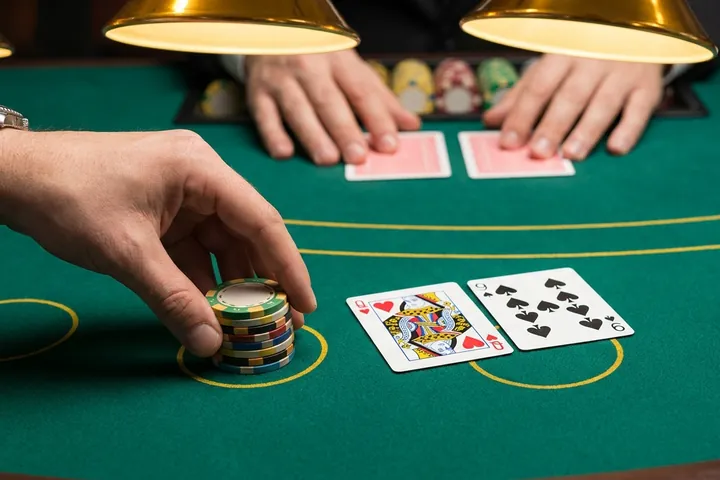
Learn the words
In Pontoon you “twist” to take a free card, “buy” to add a card while raising your bet, and “stick” to stop. You may only stick on a hand of 15 or more.
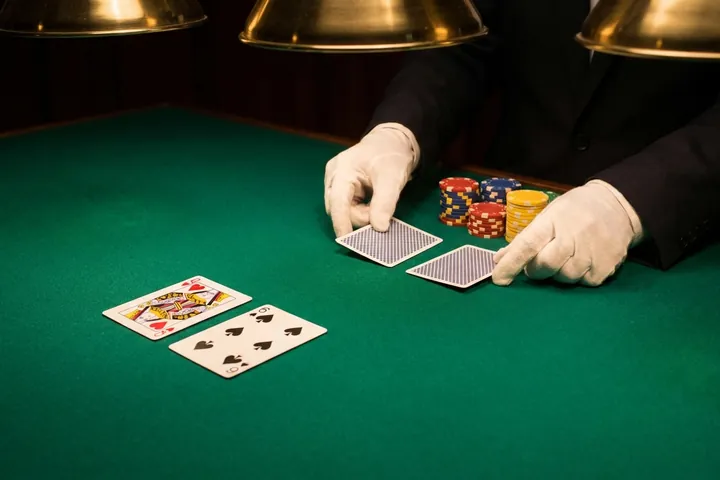
Both dealer cards hidden
The dealer (banker) takes two cards face down. You play your whole hand without seeing either, so every decision is made blind against the banker.
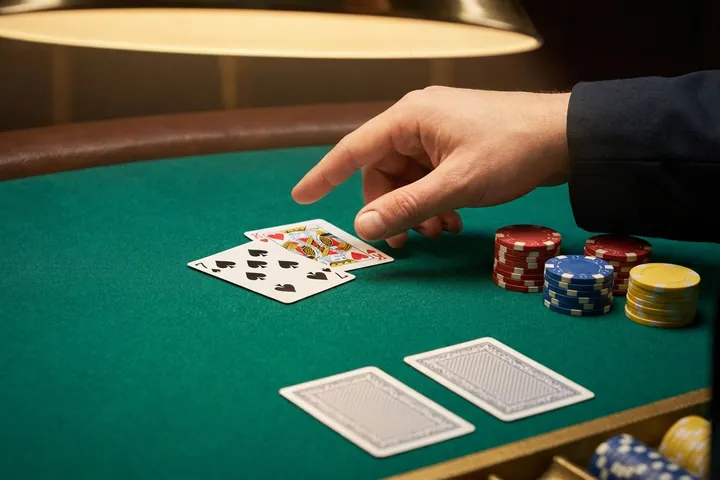
Pontoon and five-card trick
A two-card 21 is a pontoon and pays 2:1 - the best hand in the game. A five-card hand that has not busted also wins and pays 2:1, beating everything except a pontoon.
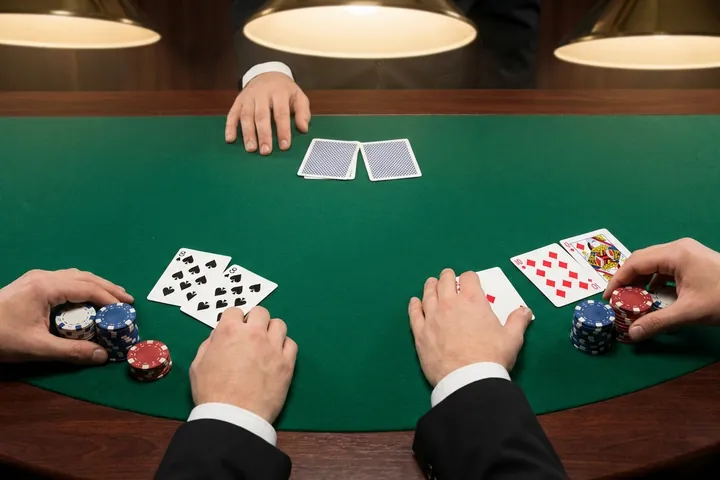
Buy, then twist
You may buy (raise your bet for a face-up card) on two, three or four cards, and you can twist for free after buying, but you cannot buy after you have twisted.
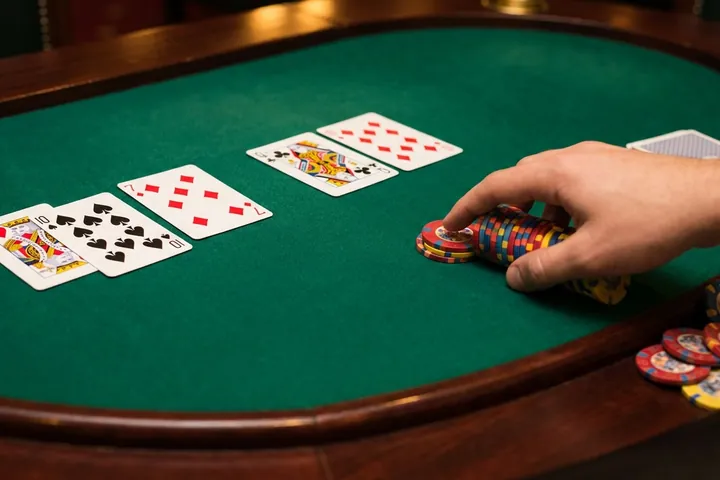
Banker wins ties
The banker draws to 17 and wins all ties, so you must beat the banker's total outright. A pontoon or five-card trick outranks an ordinary 21.
The story behind Pontoon
Pontoon is the British form of twenty-one, and its name is widely believed to be an English mangling of the French “vingt-et-un” - vint-un, then pont-oon. It developed alongside continental twenty-one but kept a distinct vocabulary and rulebook, becoming a staple of British home and pub card play long before casino blackjack arrived from America.
The traditional game is played with a banker and its own terminology: twisting for a free card, buying a card by raising the stake, sticking to stop, and prizing two special hands - the pontoon (a two-card 21) and the five-card trick (five cards under 21). Both hidden dealer cards and the banker-wins-ties rule reflect its origins as an informal banking game rather than a regulated casino offering, giving Pontoon a rougher, more aggressive character than modern blackjack.
As casinos and software standardized card games, Pontoon persisted as a recognizably British variant, distinct from the American blackjack that came to dominate globally. It also lent its name, confusingly, to an unrelated Spanish-21-style game in Australia and Asia. The classic British Pontoon - with its twist, stick, buy and five-card trick - remains a beloved traditional game, preserved in digital form with the vocabulary and rules intact.
Winning Pontoon strategy
💡 Top tip: Play aggressively toward the bonuses - Pontoon rewards drawing far more than blackjack, because the five-card trick and the 2:1 pontoon are worth chasing and ties lose anyway.
Smart plays, in order of importance
- Hit (twist or buy) more stiff totals than you would in blackjack; standing on a hard 15 or 16 usually loses to the banker, so you generally draw on totals below 15 and often on 15-16.
- Aim for the five-card trick when you hold four cards and a low total - reaching a fifth card without busting wins outright and pays 2:1, so a four-card 12 is worth twisting.
- Buy rather than twist when you have a strong drawing total and a weak-looking situation, since a bought card increases your winnings; twist for free when you just need to reach a safe total.
- Always split Aces and 8s, and remember you can only stick on 15 or more - there is no standing on a low total to wait the banker out.
- Value the pontoon itself - a two-card Ace plus a ten-value card pays 2:1, so a natural is worth more here than a 3:2 blackjack and should never be broken up.
- Ignore the banker's invisible cards and play the odds of your own hand; because you cannot see the dealer, Pontoon strategy is built entirely around your total and card count.
Advanced Pontoon tactics
- Correct Pontoon strategy is total-based, not up-card-based, because the banker's cards are hidden; you memorize when to twist, buy or stick purely from your own hand.
- The five-card trick reshapes drawing decisions: with three or four cards and a modest total, twisting toward five cards is often correct even at totals a blackjack player would never hit.
- Buy on your strongest totals (a two-card 11 or 10, for example) to put more money in when you are most likely to win, and reserve free twists for building safely toward 21 or a five-card trick.
- Because the banker wins ties, treat any hand that merely matches a likely banker total as a loss and push to beat it, which justifies drawing to 18 or 19 where blackjack would stand on 17.
- Split Aces are powerful because a resulting two-card 21 on a split can still be a strong hand, though rules vary on whether a split Ace-ten counts as a pontoon.
- Track your card count within the hand - knowing you are one card from a five-card trick changes a borderline stick into a twist, since surviving that draw wins outright.
- Manage variance from the aggressive style; chasing five-card tricks and pontoons produces bigger swings than cautious blackjack, so bet sizes should account for the swingier outcomes.
Common Pontoon mistakes to avoid
- Playing cautiously like blackjack - the banker wins ties and the five-card trick pays 2:1, so Pontoon rewards aggressive drawing.
- Standing on a low total - you can only stick on 15 or more, and matching the banker loses, so you must twist or buy on weak hands.
- Ignoring the five-card trick - with four cards and a modest total, twisting toward a non-busting fifth card wins outright and pays 2:1.
- Buying when you should twist - buy on your strongest totals to raise the stake, and take free twists just to reach a safe hand.
Pontoon rule variations
British vs. Australian Pontoon
A major source of confusion: British Pontoon is this traditional twist-and-stick game, while Australian/Asian “Pontoon” is essentially Spanish 21 with the tens removed and different bonuses. They share only a name.
Number of decks
Home Pontoon is often played with a single deck, while digital and casino versions use two or more. Fewer decks slightly help the player, as in any twenty-one game.
Five-card trick payouts
Most versions pay the five-card trick 2:1, but some house rules pay more for six-card or seven-card hands, rewarding even deeper draws with escalating bonuses.
Split and buy rules
Home and casino versions differ on whether you can split, re-split, and buy on split hands, and on whether a split Ace-ten counts as a pontoon - details worth checking before you play.
Banker rotation
In the traditional home game the role of banker passes between players under set rules, a social element that the fixed-dealer casino and digital versions replace with a permanent house banker.
Pontoon questions and answers
Is Pontoon the same as blackjack?
It is a close British relative with different vocabulary and several distinct rules. Both dealer cards are hidden, you twist and buy instead of hitting, the banker wins ties, and a two-card 21 (a pontoon) and a five-card trick both pay 2:1. The goal - beat the banker at 21 - is the same.
What is a five-card trick?
A five-card trick is any hand of five cards that has not busted, totaling 21 or less. It wins automatically, beating every hand except a pontoon, and pays 2:1. Chasing it is a core part of Pontoon strategy and a big reason the game rewards aggressive drawing.
What does “twist,” “buy” and “stick” mean?
To twist is to take another card for free, like a hit. To buy is to take a card while increasing your bet. To stick is to stop drawing, like standing - but you may only stick on a total of 15 or more.
What is a pontoon?
A pontoon is a two-card 21 - an Ace plus a ten-value card - the equivalent of a blackjack. It is the best hand in the game, beats a five-card trick, and pays 2:1 rather than blackjack's 3:2.
Why can't I see the dealer's cards?
In Pontoon both of the banker's cards are dealt face down and stay hidden until you finish your hand. Playing blind is fundamental to the game, which is why correct Pontoon strategy depends only on your own total, not on a dealer up-card.
Does the banker really win all ties?
Yes. The banker wins every tie, so matching the banker's total is a loss - you must beat it outright. This harsh rule is one of the ways Pontoon pays for its generous 2:1 pontoon and five-card-trick bonuses.
Can I stand on any total?
No. You may only stick (stand) on a hand of 15 or more. On 14 or less you must twist or buy another card, which forces the aggressive drawing style that defines the game.
Is the strategy different from blackjack?
Very. Because the dealer's cards are hidden, Pontoon strategy is based purely on your own total and card count, and it draws far more aggressively - twisting stiff hands and chasing the five-card trick in spots where blackjack would stand.
What is the house edge?
With correct Pontoon strategy the edge is roughly 0.4%, competitive with good blackjack games. The 2:1 pontoon and five-card-trick bonuses offset the banker-wins-ties and hidden-card rules.
Is this the same as Australian Pontoon?
No. Confusingly, “Pontoon” in Australia and Asia usually refers to a Spanish-21-style game with no tens and different bonuses. This game is the traditional British Pontoon with twist, stick, buy and the five-card trick.
Pontoon guides & strategy
- Pontoon rules: twist, stick and buy
- Pontoon strategy vs blackjack strategy
- The complete blackjack basic-strategy guide
Still have a question about Pontoon? Browse the full blackjack FAQ, look up a term like european & international or house edge in the blackjack glossary, or compare Pontoon with the other games in the rules for every blackjack variant.
Last updated .