Play European Blackjack
No hole card - the dealer draws the second card only at the end.European Blackjack is free to play right here with no download, no signup and no real-money risk - you start every session with 1,000 play chips. No hole card - the dealer draws the second card only at the end. It is dealt from 2 decks, blackjack pays 3:2, and a basic-strategy player faces a house edge of about ~0.6% with basic strategy.
European Blackjack follows the “no hole card” convention used across much of Europe: the dealer takes only one card at the start and does not draw the second until every player has finished acting. Because the dealer cannot peek for blackjack, any chips you commit by doubling or splitting are at risk if the dealer later turns over a natural - a real difference from the American peek game. It is dealt from two decks with the dealer standing on soft 17. That single structural change ripples into strategy. Against a dealer 10 or Ace you must be more cautious about doubling and splitting, because a hidden blackjack can sweep the extra bet. European rules also restrict doubling to hard 9, 10 and 11 and forbid re-splitting, so the game plays a touch tighter than its American cousins. Learn the no-peek adjustments and it remains a fair, low-edge game with a distinctly continental character.
How to Play European Blackjack
In a nutshell: No hole card - the dealer draws the second card only at the end. It is dealt from 2 decks (104 cards), blackjack pays 3:2, and the house edge is about ~0.6% with basic strategy.
The rules of European at a glance
| Dealer rule | Stands on soft 17; no hole card |
|---|---|
| Decks | 2 standard 52-card decks |
| Blackjack pays | 3:2 |
| Double down | Hard 9, 10 and 11 only |
| Split | One split only; no re-splitting |
| Dealer peek | No - second card drawn after players act |
| House edge | ~0.6% with basic strategy |
| Difficulty | No-peek rules |
| Family | European & International |
Step by step
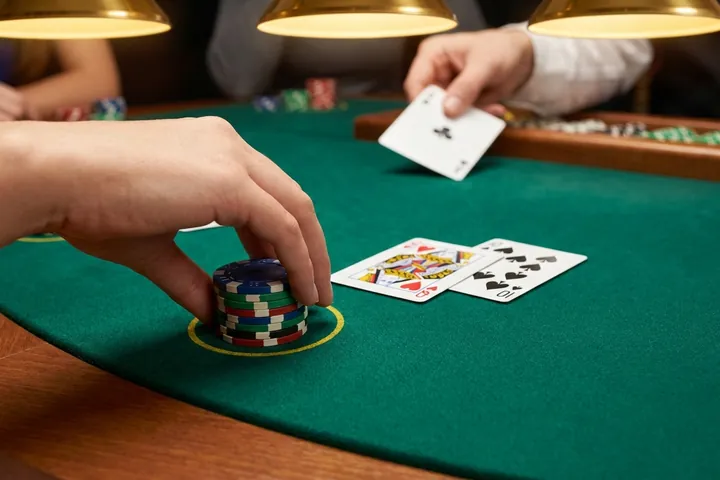
Objective
Beat the dealer without busting, using two decks and the classic European no-hole-card structure.
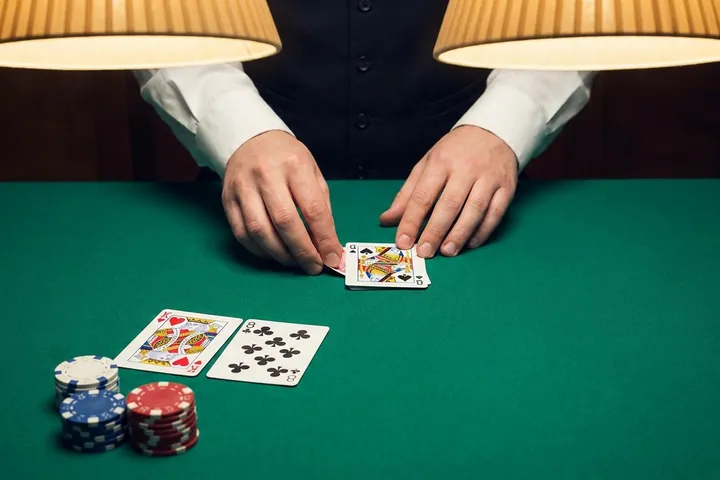
Single dealer card
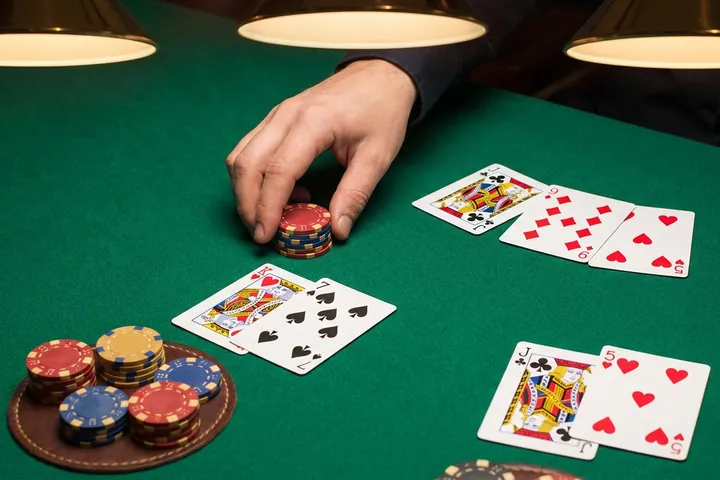
You receive two cards; the dealer takes just one up-card and no hole card yet. The dealer's second card comes only after you finish your hand.
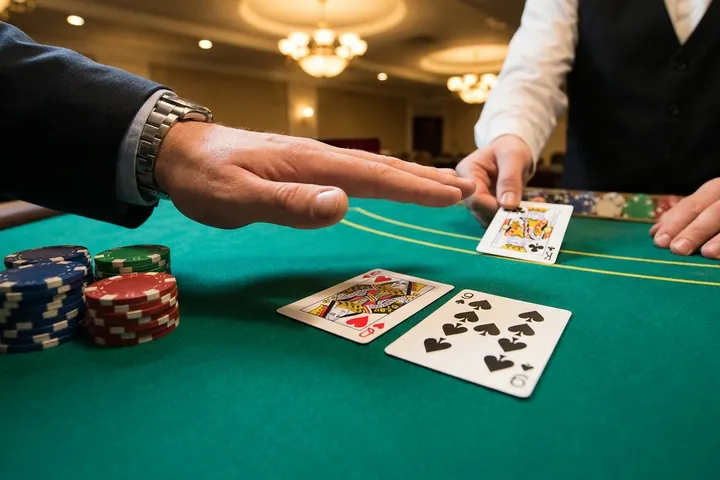
Restricted doubling
Double down only on a hard total of 9, 10 or 11. This tighter doubling rule is standard in the European game.
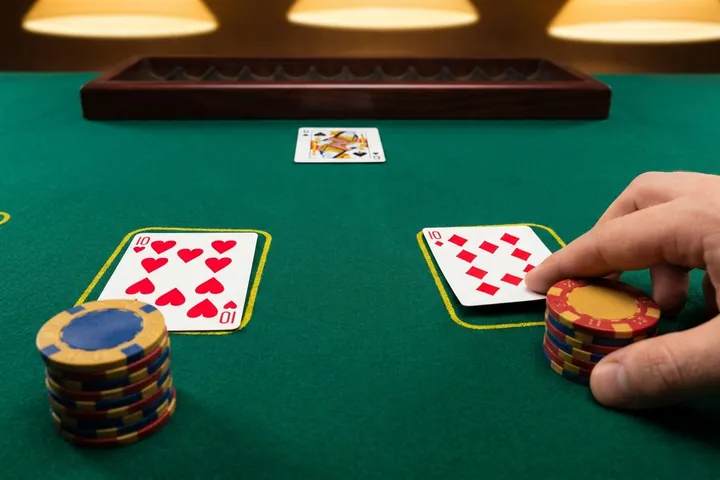
Split with care
Split pairs into two hands, but you cannot re-split, and against a dealer 10 or Ace remember your split bet is exposed to a possible dealer blackjack.
Dealer completes last
After all players act, the dealer draws a second card and then hits to 17, standing on soft 17. A dealer natural at this point beats and collects doubled or split bets.
The story behind European
Blackjack arrived in Europe as an offshoot of the same French vingt-et-un that seeded the American game, but European casinos developed a different dealing convention. To streamline play and reduce the chance of dealers accidentally exposing information, many houses adopted the “no hole card” method, dealing the dealer a single card up front and completing the hand only after players had acted.
This structure required a fairness adjustment. Because a player could commit extra money by doubling or splitting before knowing whether the dealer held a blackjack, European rules specified that a dealer natural would sweep only the original bet in some jurisdictions, or all committed bets in others - a detail that still varies. The widely modeled digital version treats a dealer blackjack as beating doubled and split bets, which is why strategy adapts against 10s and Aces.
The no-hole-card game spread throughout European and many international casinos and became the template for “European Blackjack” in software. It preserves the core of twenty-one while encoding a genuinely different risk profile, and it remains one of the most widely played blackjack rulesets outside North America.
Winning European strategy
💡 Top tip: Adjust for no peek - the core European skill: against a dealer 10 or Ace, avoid doubling and splitting hands you would happily double in a peek game, because a hidden blackjack can take the extra chips.
Smart plays, in order of importance
- Do not split 8s or Aces against a dealer Ace or 10 the way you would in American rules; the no-hole-card risk makes standing or hitting safer on some of those spots.
- Double only hard 9, 10 and 11 since European rules forbid doubling other totals - there is no doubling soft hands here.
- Double 11 against a dealer 2 through 9, but not against a 10 or Ace, precisely because of the blackjack exposure.
- Stand on hard 12-16 versus a dealer 2 through 6 and hit them versus 7 or higher, the same weak-versus-strong logic as always.
- Skip insurance and even money; the no-peek rule does not change the fact that a dealer Ace makes blackjack less than a third of the time.
- Because there is no re-splitting, treat your one allowed split as a single decision - there is no second bite if you draw another pair.
Advanced European tactics
- The no-hole-card rule costs the player roughly 0.1% and specifically changes plays against a dealer 10 and Ace; a dedicated “European” or “ENHC” strategy chart differs from the American one only in that corner.
- Against a dealer 10, hit hard 11 rather than doubling, and against a dealer Ace, hit 11 as well - the potential dealer blackjack makes the double a losing proposition.
- Split 8s against a dealer 9 or lower but not against a 10 or Ace under no-peek rules; the exposure of two split bets to a dealer natural flips the decision.
- Doubling restricted to 9-11 removes soft doubling entirely, so play soft 13-18 as hits and stands only, and never expect to double an Ace-x hand.
- Two decks make the game slightly friendlier than a six-deck shoe, marginally increasing the value of your legal doubles on 9, 10 and 11.
- Keep the surrender option out of mind - classic European Blackjack does not offer surrender, so your only defensive tool is disciplined hitting and standing.
- Because the dealer stands on soft 17, stand on soft 18 against a dealer 2 through 8 and only hit it into a 9, 10 or Ace.
Common European mistakes to avoid
- Doubling 11 against a dealer 10 or Ace - with no hole card a hidden dealer blackjack can sweep the extra chips, so hit instead.
- Splitting 8s or Aces into a dealer Ace - the no-peek exposure flips several of those splits into hits or stands.
- Trying to double a soft hand - European rules only allow doubling hard 9, 10 and 11, with no soft doubling at all.
- Planning a re-split - the European game allows just one split, so treat that single split as your only shot.
European rule variations
Original bets only (OBO)
A friendlier no-hole-card rule where a late dealer blackjack takes only your original wager and returns the doubled or split portion, which softens the no-peek penalty considerably.
Busted bets rule
The stricter version, where a dealer blackjack collects all committed chips including doubles and splits. This is the harsher interpretation that most demands cautious play against 10s and Aces.
Six-deck European
The same no-hole-card structure dealt from a larger shoe, common in international casinos, trading a little edge for a longer, harder-to-track game.
Double on 9-11 only
The classic European doubling restriction; some tables loosen it to any two cards, which lowers the edge and restores soft doubling to the strategy.
Re-split allowed
A minority of European tables permit re-splitting pairs, a small bonus over the standard single-split rule that slightly benefits the player.
European questions and answers
What does “no hole card” mean?
It means the dealer takes only one card at the start and does not draw or look at a second card until all players have finished. In the American game the dealer takes a face-down hole card immediately and peeks for blackjack; European rules skip that.
Why does the missing hole card matter?
Because the dealer cannot check for blackjack before you act, any chips you add by doubling or splitting are lost if the dealer later reveals a natural. In the peek game those extra bets would be returned, so European rules make you more cautious against a 10 or Ace.
How many decks does European Blackjack use?
The classic version is dealt from two decks, fewer than the six or eight common in American shoe games, which slightly helps the player and offsets a little of the no-peek disadvantage.
Can I double on any two cards?
No. European rules restrict doubling to hard totals of 9, 10 and 11, and there is no doubling of soft hands. This is tighter than the American double-on-anything rule.
Can I re-split pairs?
No. European Blackjack typically allows only a single split - you cannot split again if you draw a third matching card. Plan your one split accordingly.
Does the dealer hit or stand on soft 17?
The dealer stands on soft 17 in the standard European game, the more player-friendly rule that helps keep the overall house edge modest despite the no-peek structure.
Is the basic strategy different?
Only in a few spots, all against a dealer 10 or Ace. You avoid doubling 11 and splitting 8s or Aces into a potential dealer blackjack. Everywhere else the correct plays match standard basic strategy.
What is the house edge?
With correct no-hole-card basic strategy the edge is roughly 0.6%, a little higher than the American peek game because of the exposure risk and the tighter doubling and splitting rules.
Is European Blackjack the same as Pontoon?
No. Pontoon is a distinct British game with its own vocabulary and rules - both dealer cards hidden, the dealer winning ties, and a five-card trick. European Blackjack is standard blackjack played with the no-hole-card convention.
Should I take insurance in the European game?
No. Insurance remains a losing bet regardless of the hole-card rule. The right response to a dealer Ace is correct basic strategy, not a side bet that pays 2:1 against a better-than-2:1 chance.
European guides & strategy
- The no-hole-card rule, explained
- Basic strategy adjustments for European rules
- The complete blackjack basic-strategy guide
Still have a question about European Blackjack? Browse the full blackjack FAQ, look up a term like european & international or house edge in the blackjack glossary, or compare European with the other games in the rules for every blackjack variant.
Last updated .